Practical thinking for teams running product data at scale — supplier workflows, enrichment, governance, and more.
Akeneo has now acquired PricingHub, which makes this a good moment to ask why.
Manufacturers make the products, so they must hold the product data. Distributors sell those products, so they must be able to get hold of it.
A conversation we had recently, about a genuinely large retailer. What does their tech stack look like?
AI does not guess. It reasons, and it can only reason with what you give it.
Ask most people in this industry where Australia sits and you get an answer about lag.
Most product data work starts in the wrong place. Marketing needs descriptions for launch, so somebody writes descriptions.
Product data is the most important pillar of any ecommerce strategy, and almost nobody treats it that way.
The minute a new head of ecommerce arrives, or a new board takes a look at the digital roadmap, the same line appears. We need a PIM.
PIM and ecommerce replatform projects run late and over budget with remarkable consistency.
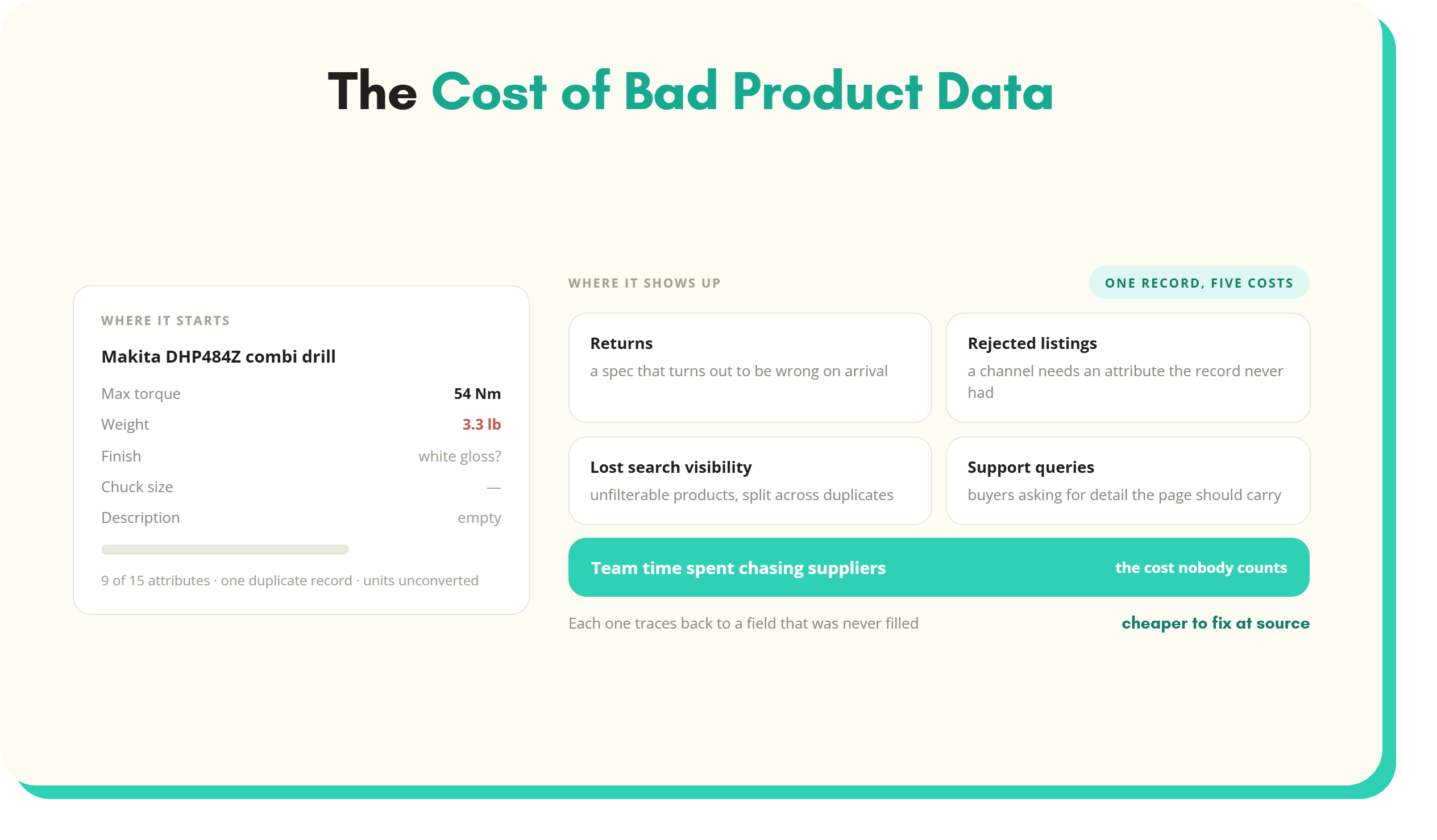
The cost of bad product data is real, but it is spread thin enough that most teams never add it up.
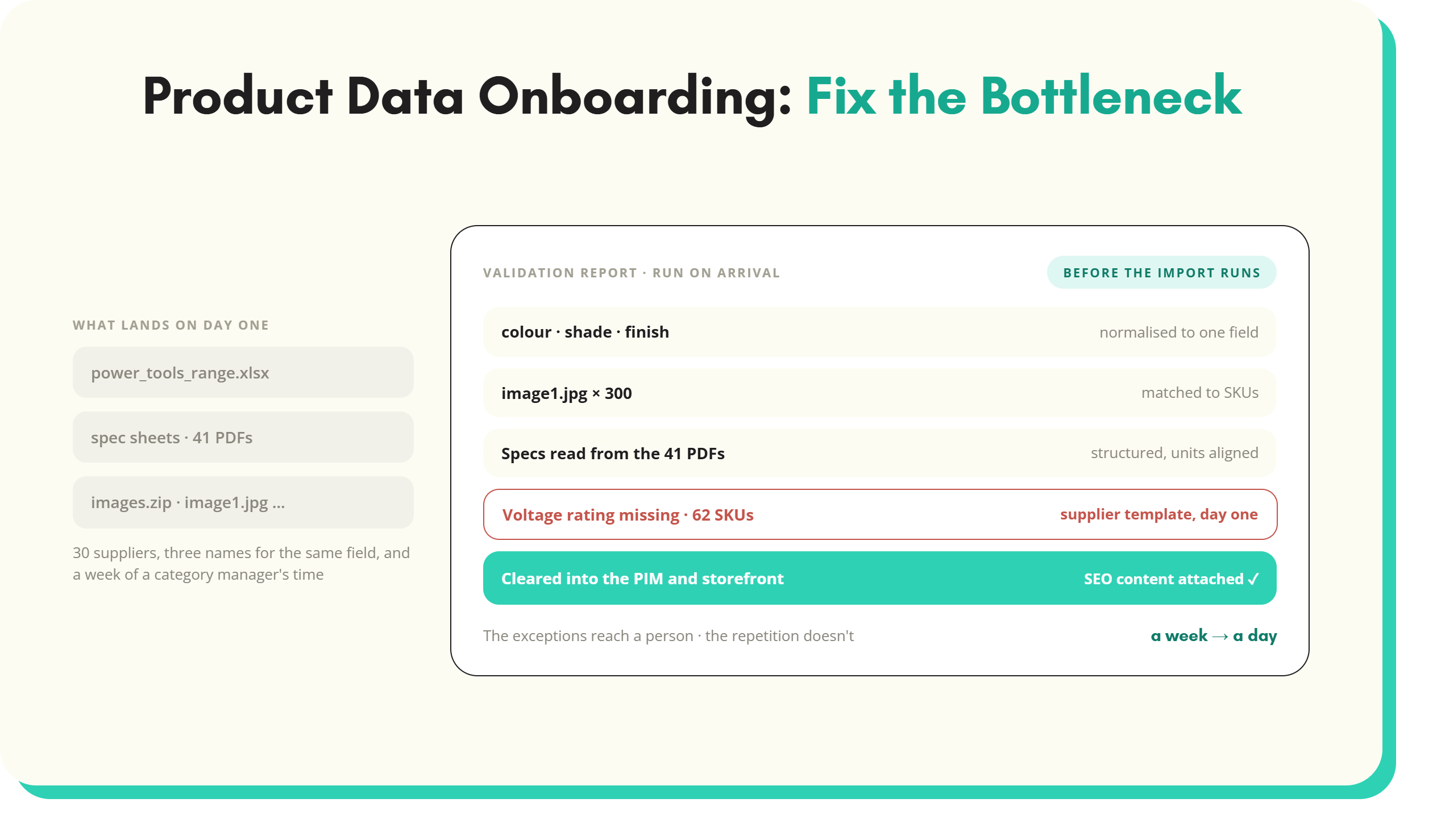
For retailers and distributors, product data onboarding is one of the most persistent operational bottlenecks in the business.
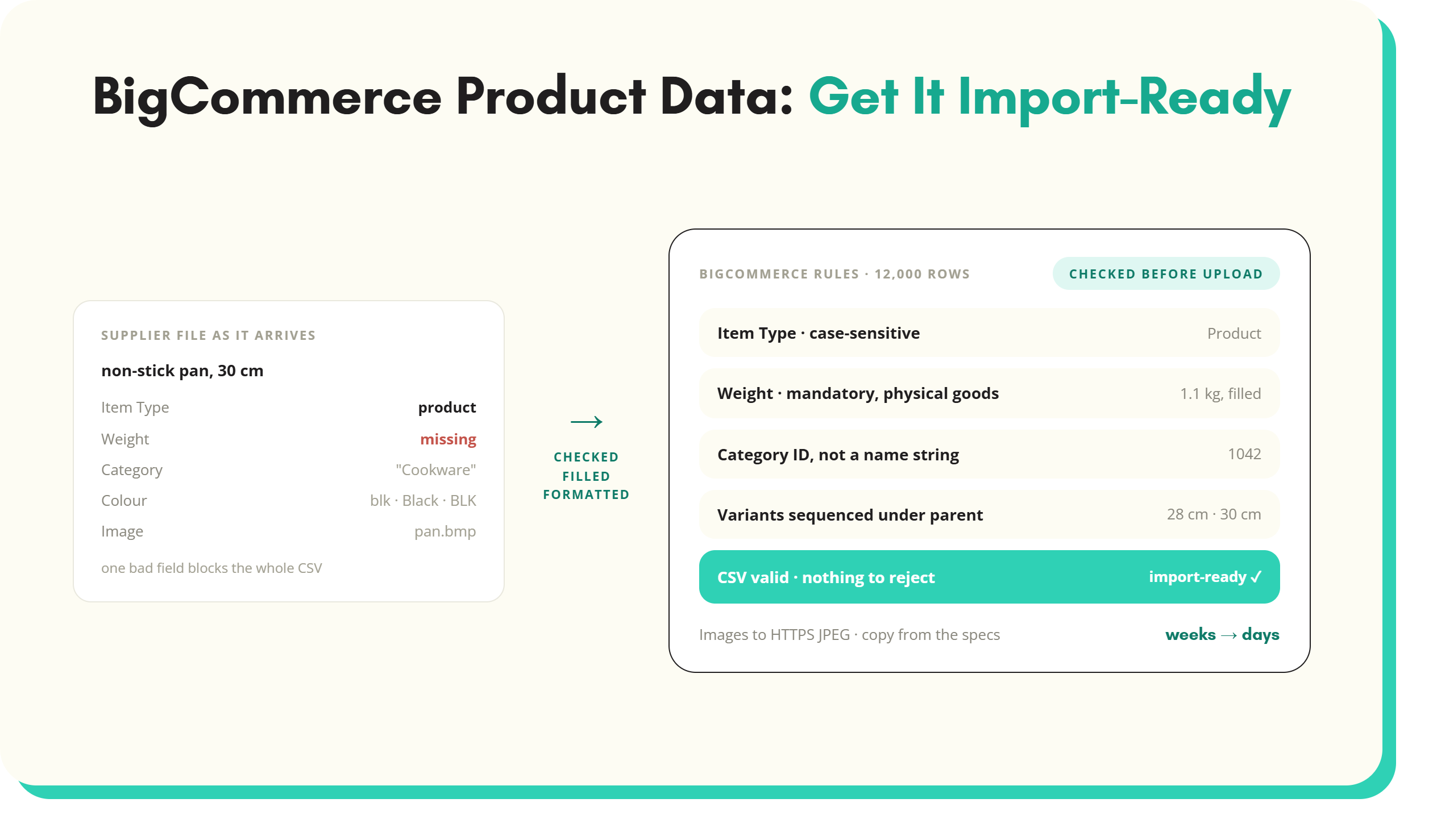
BigCommerce product data is where a lot of otherwise well-built replatforms stall.
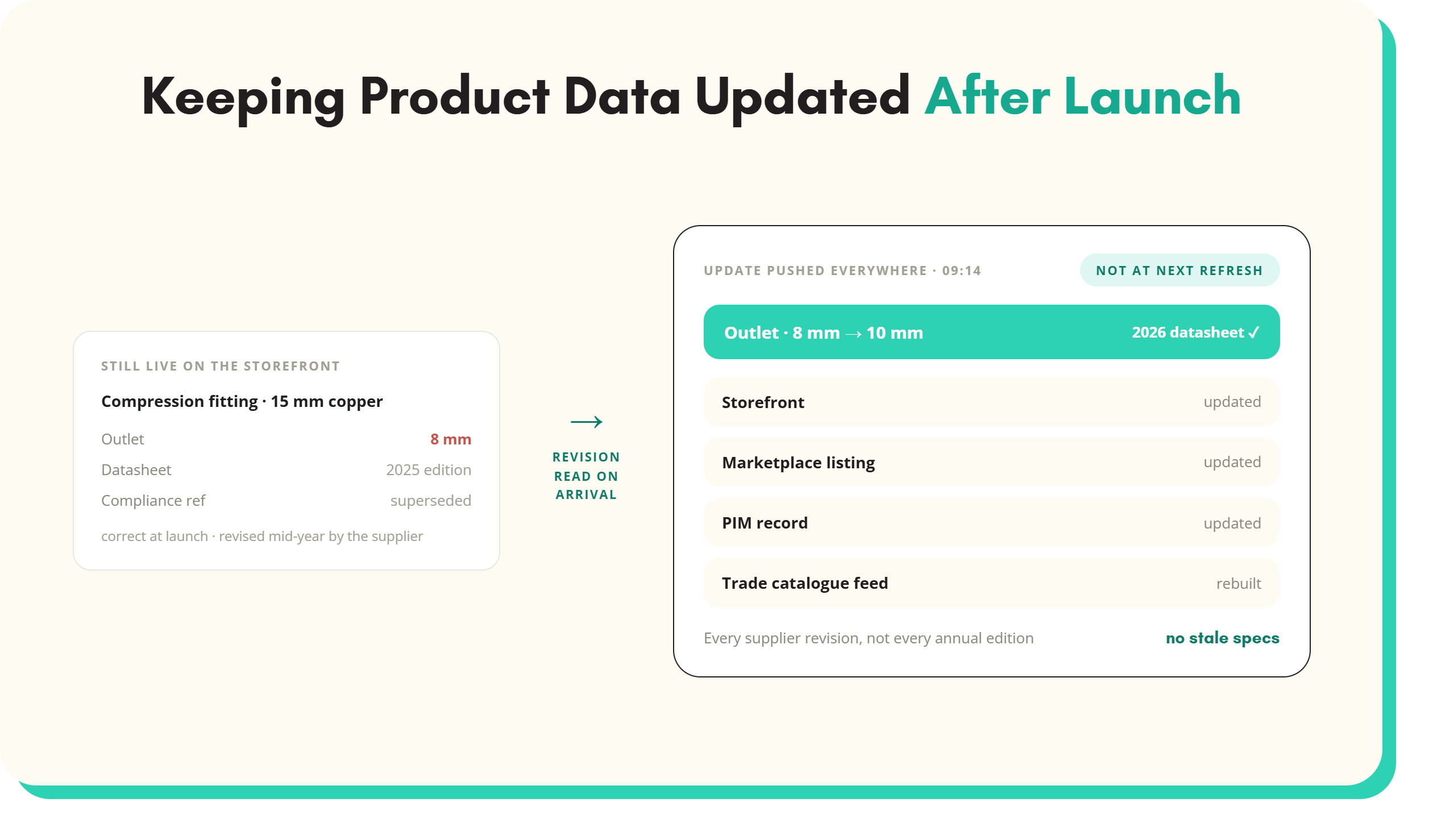
A catalogue that was accurate at launch can drift out of date within months if nothing is actively keeping it current.
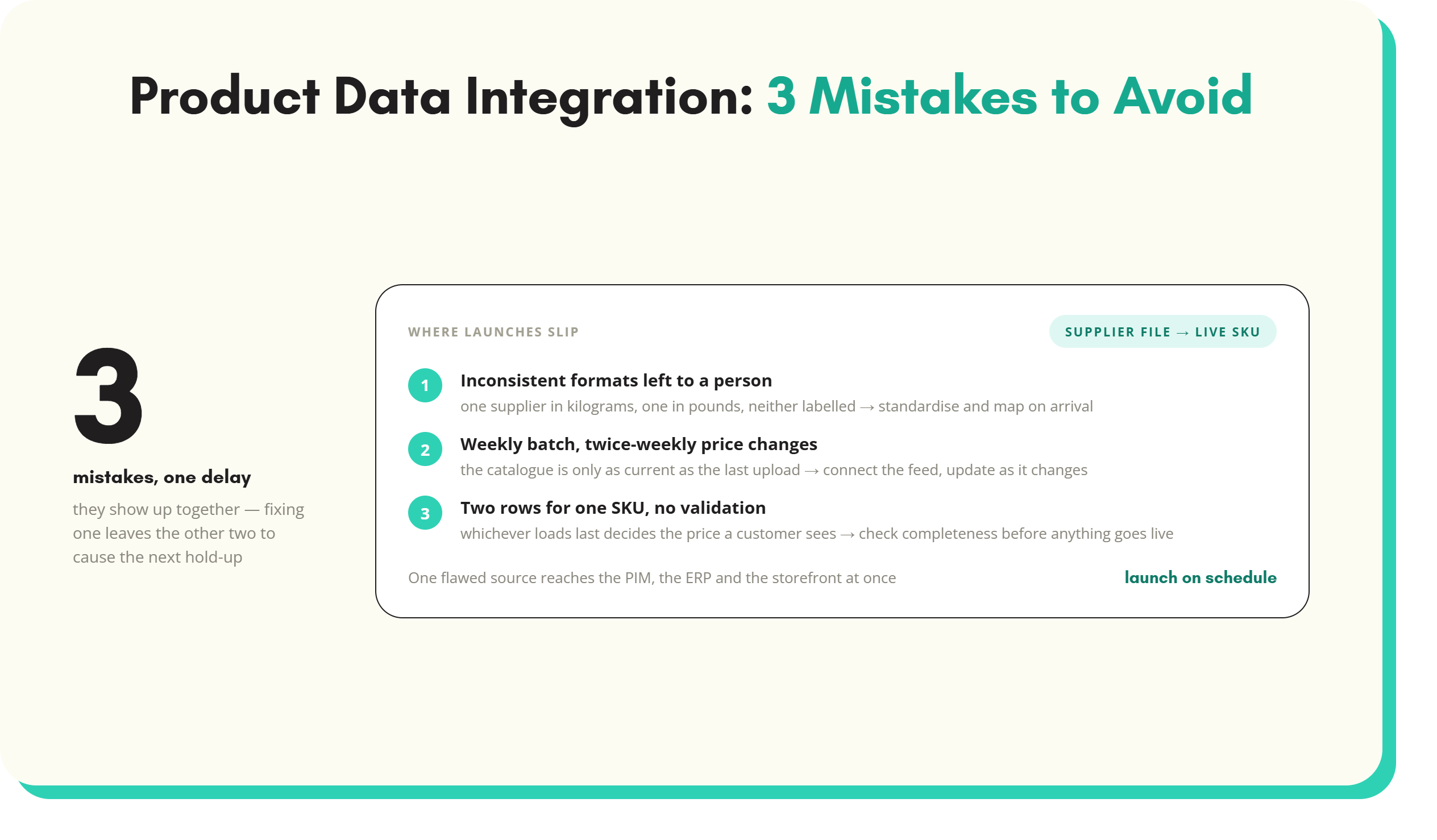
Product data integration is what determines whether a new SKU actually goes live on schedule.
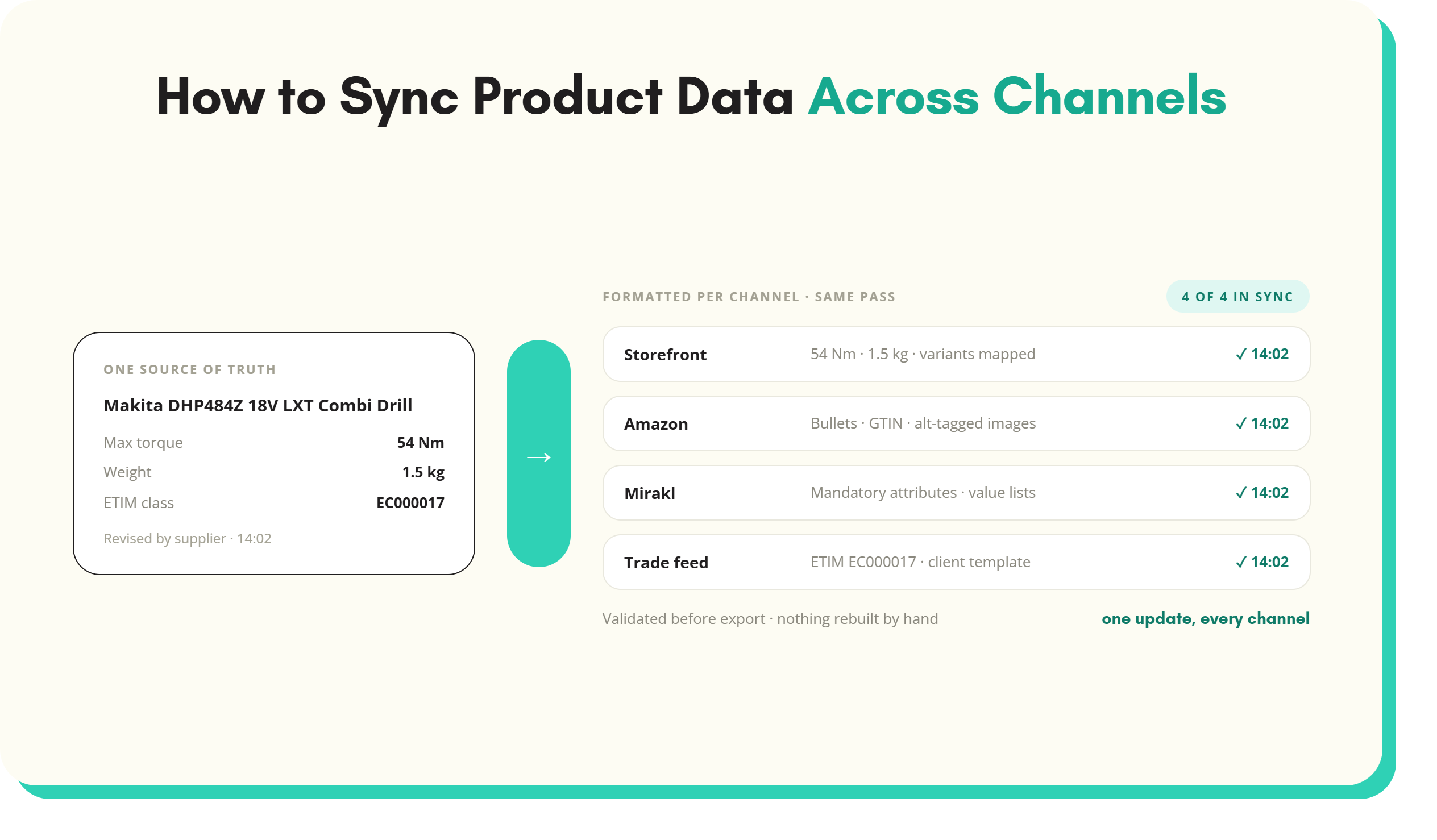
Learning how to sync product data across every channel at once is what closes that gap.
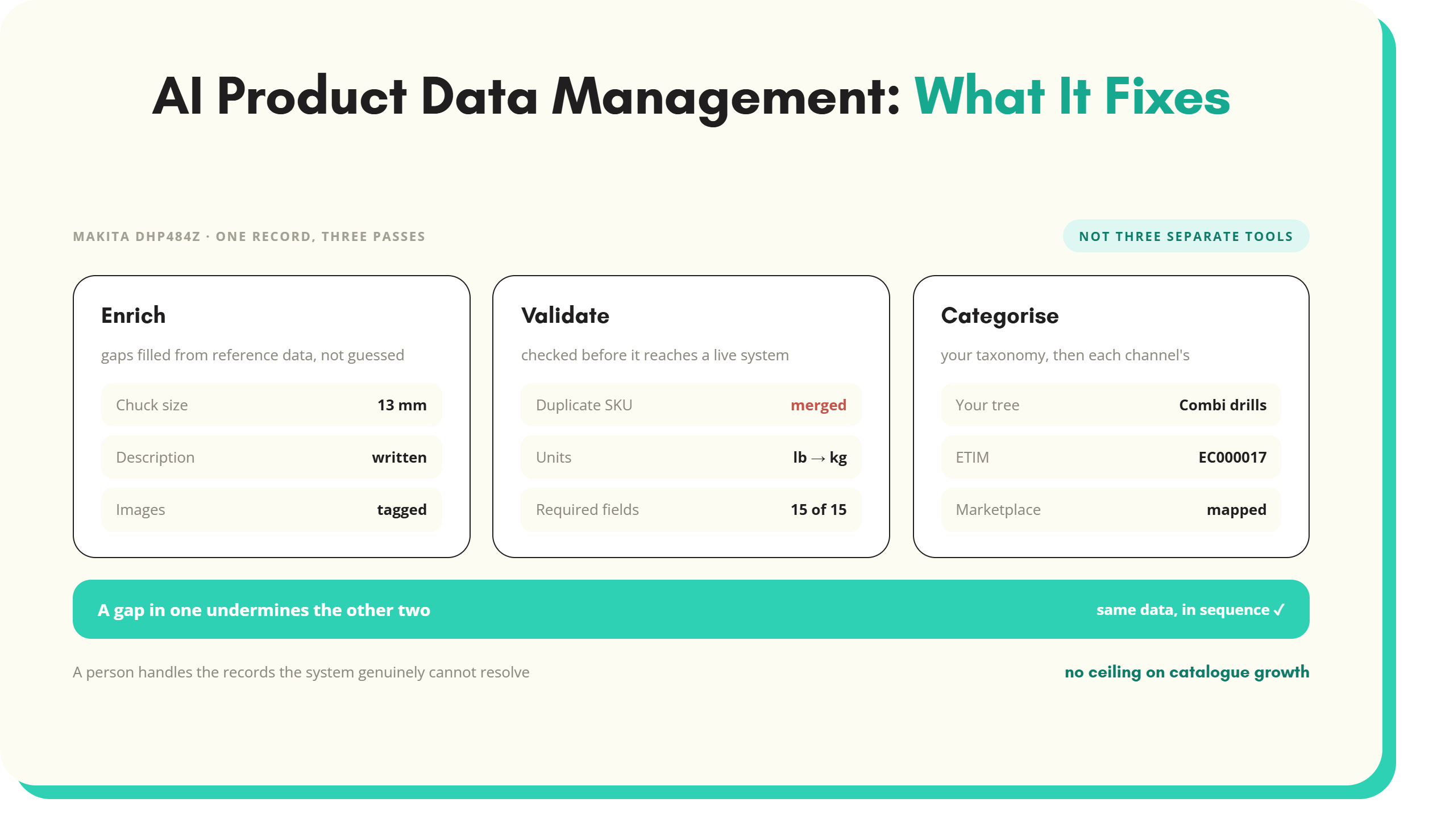
AI product data management replaces a specific kind of manual work. Continue reading to learn more!
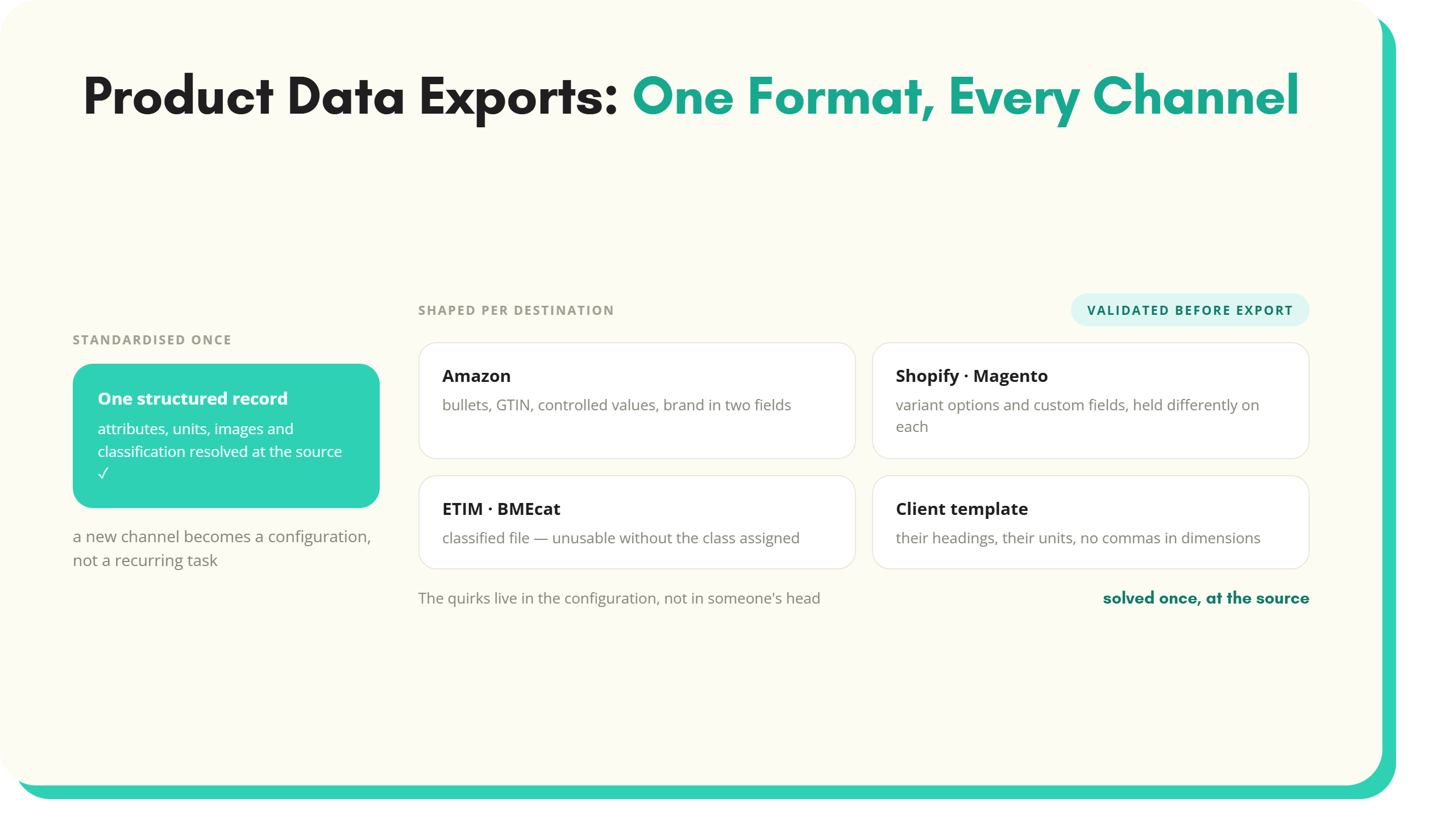
Product data exports break down for a simple reason: every channel wants something slightly different.
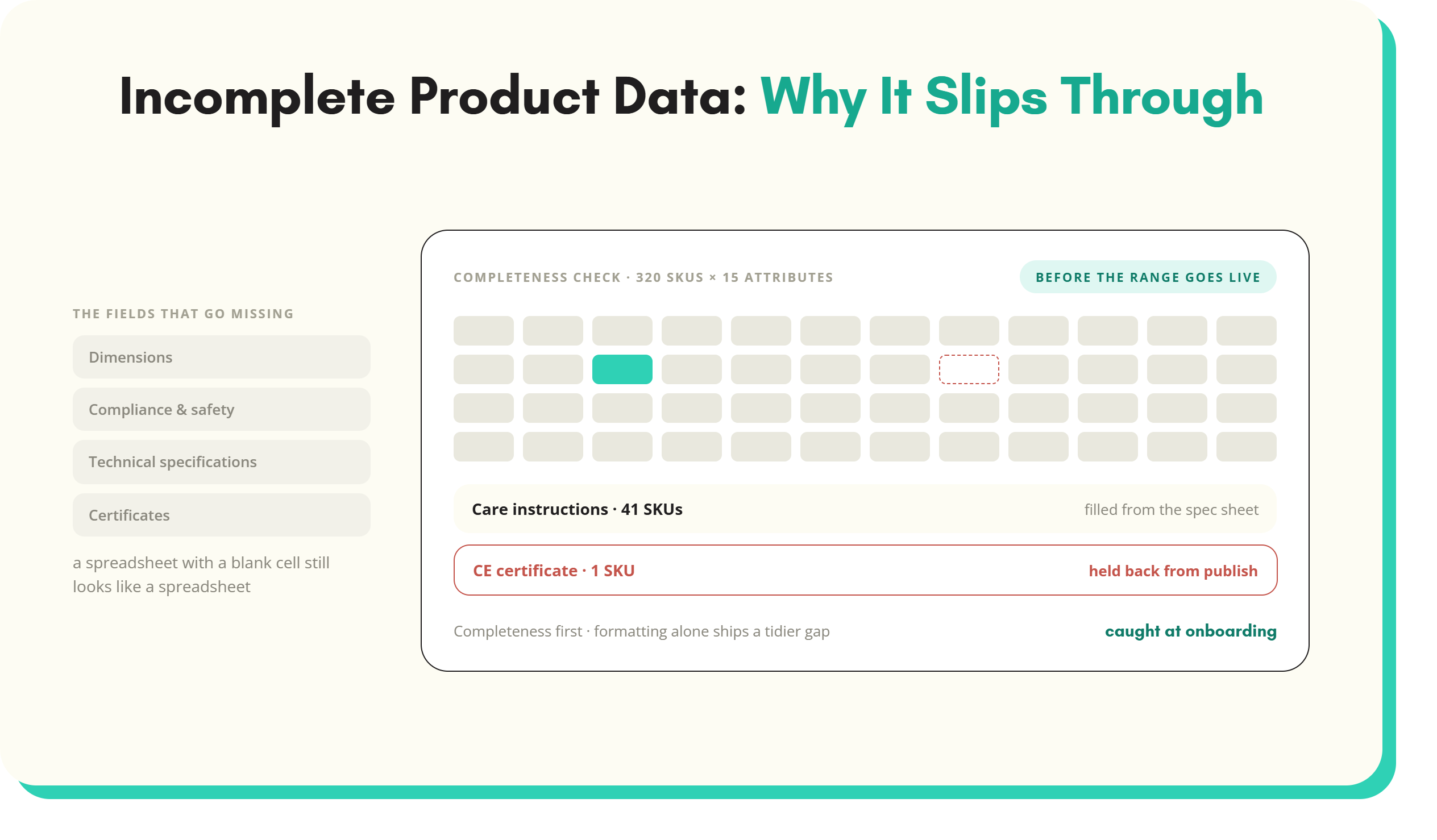
Incomplete product data is one of the most common reasons a product launch stalls.
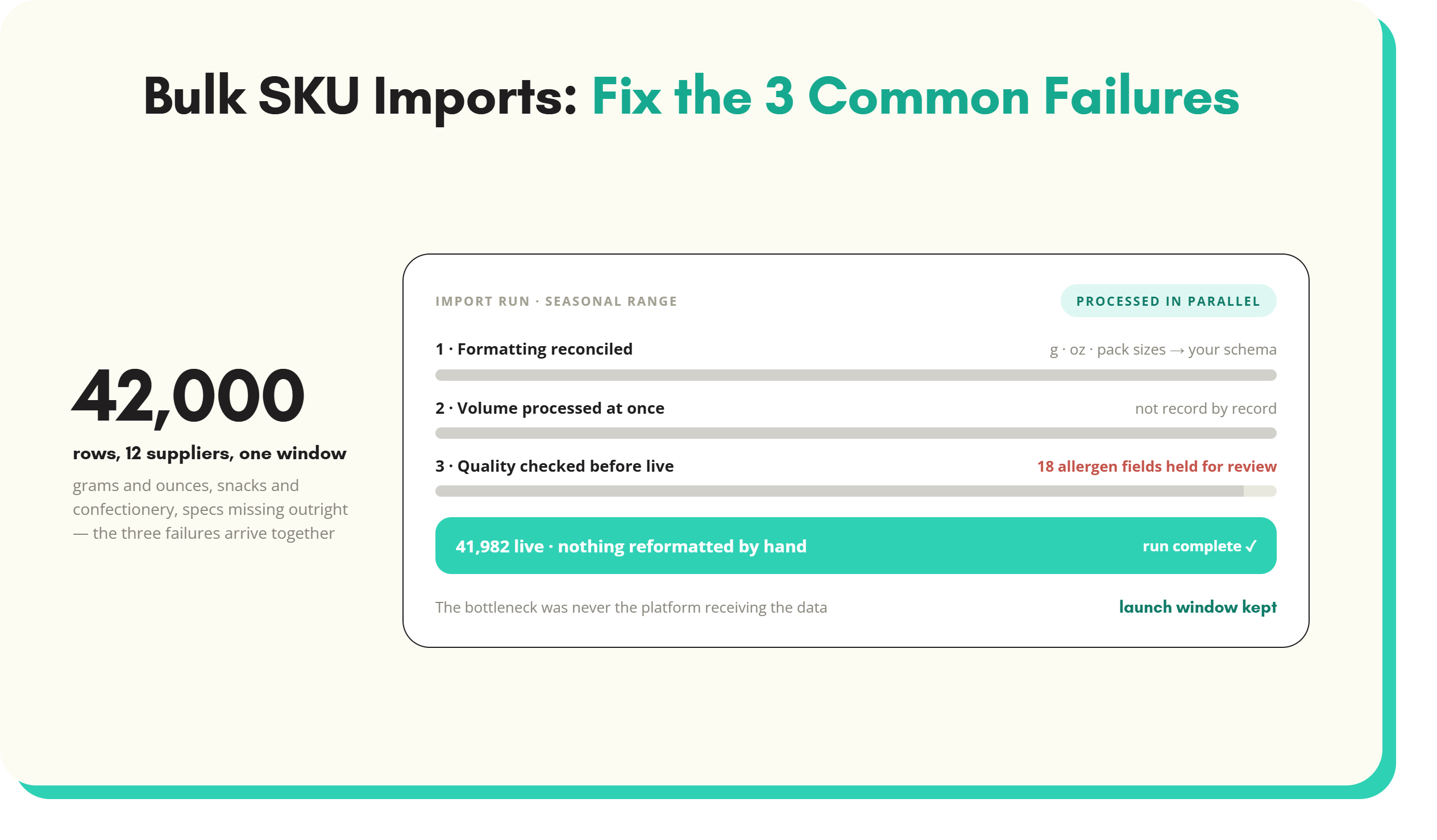
Bulk SKU imports are where a lot of otherwise well-planned launches lose their timeline.
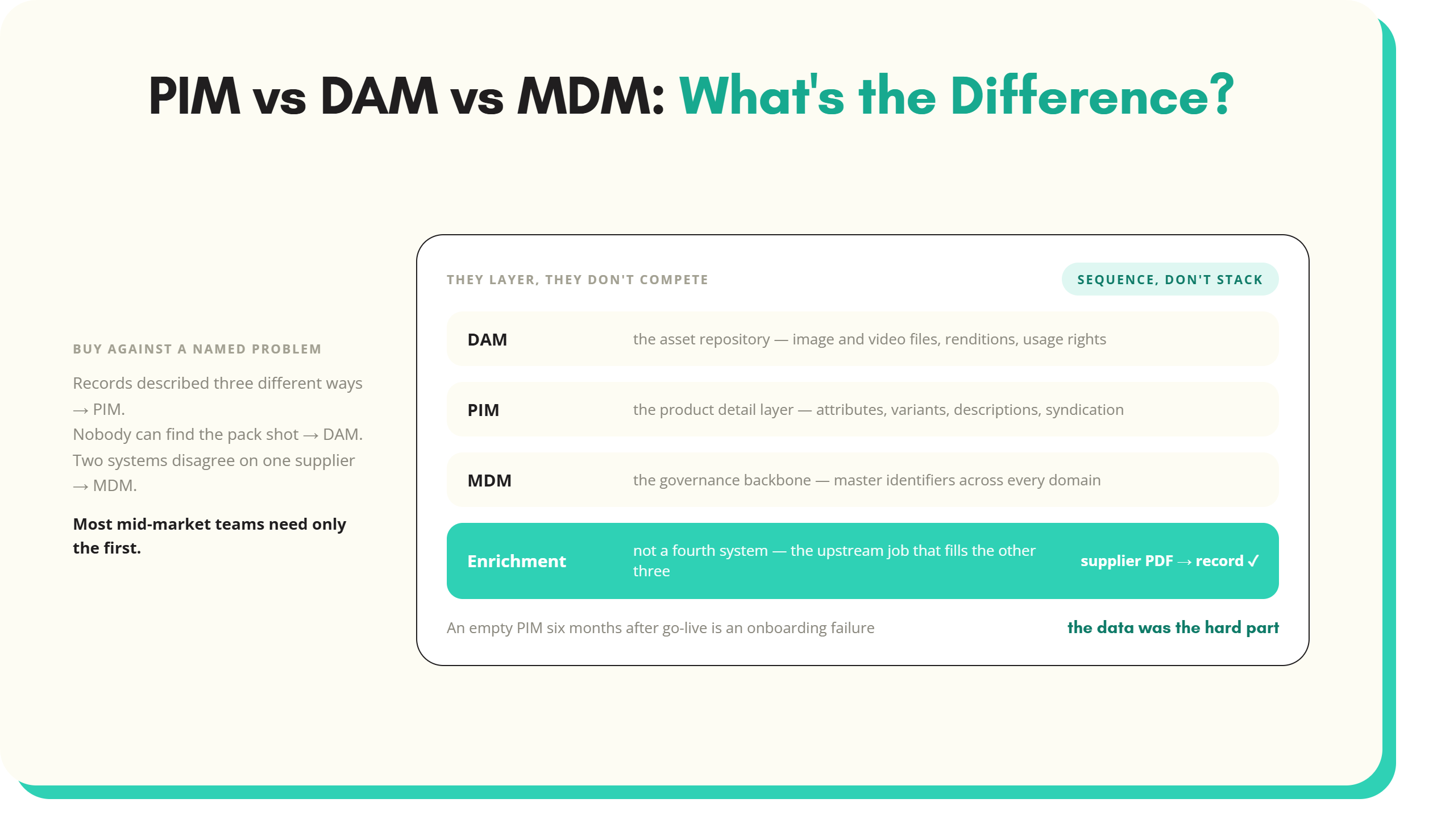
PIM holds the product record, DAM the files, MDM the master data. Side by side, plus a worked example from ERP to channel.
Here is how each works, where each fits, and how most production environments end up using both.
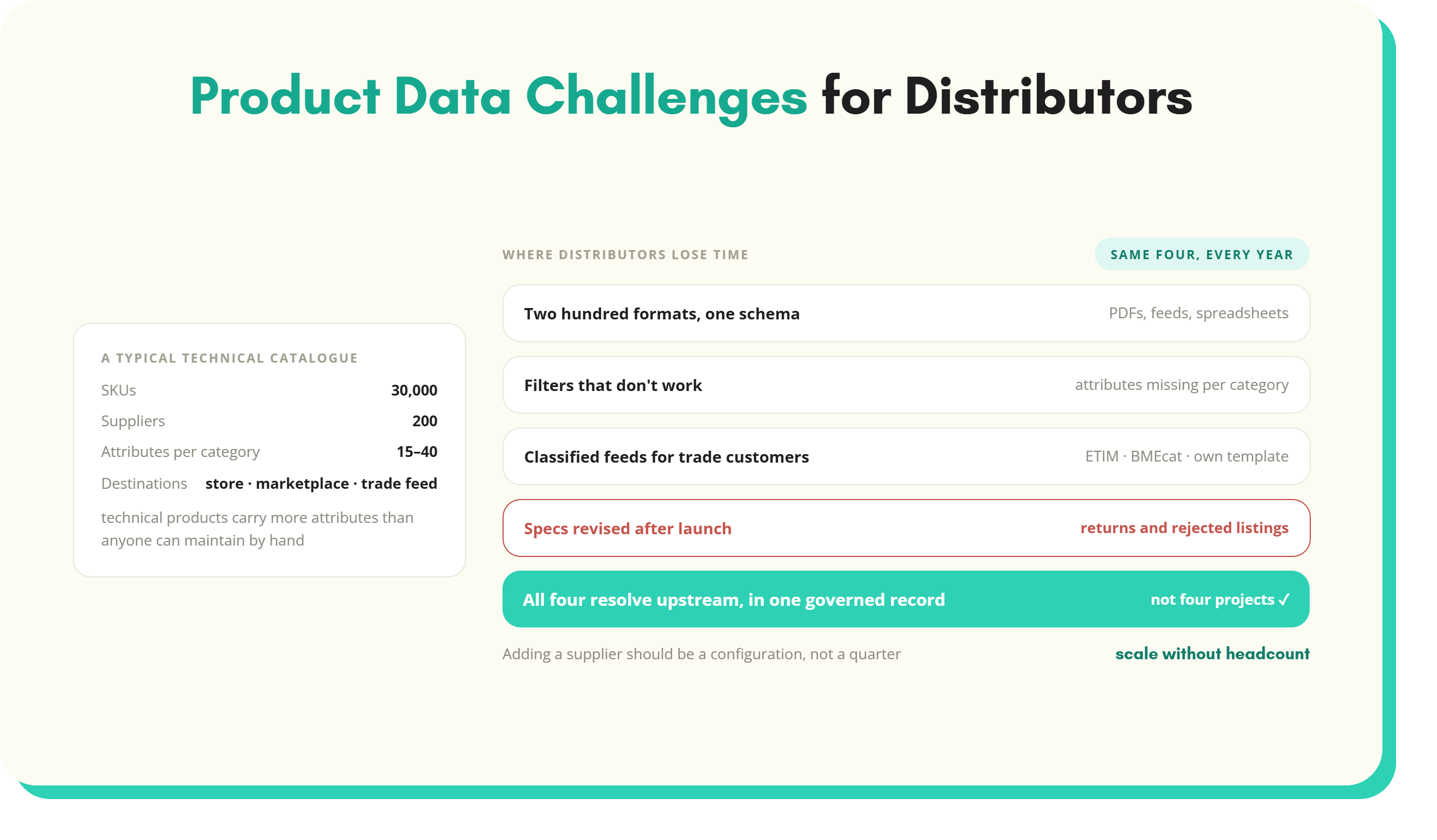
Generic product data advice, built around fashion and home goods use cases, doesn’t address any of this.
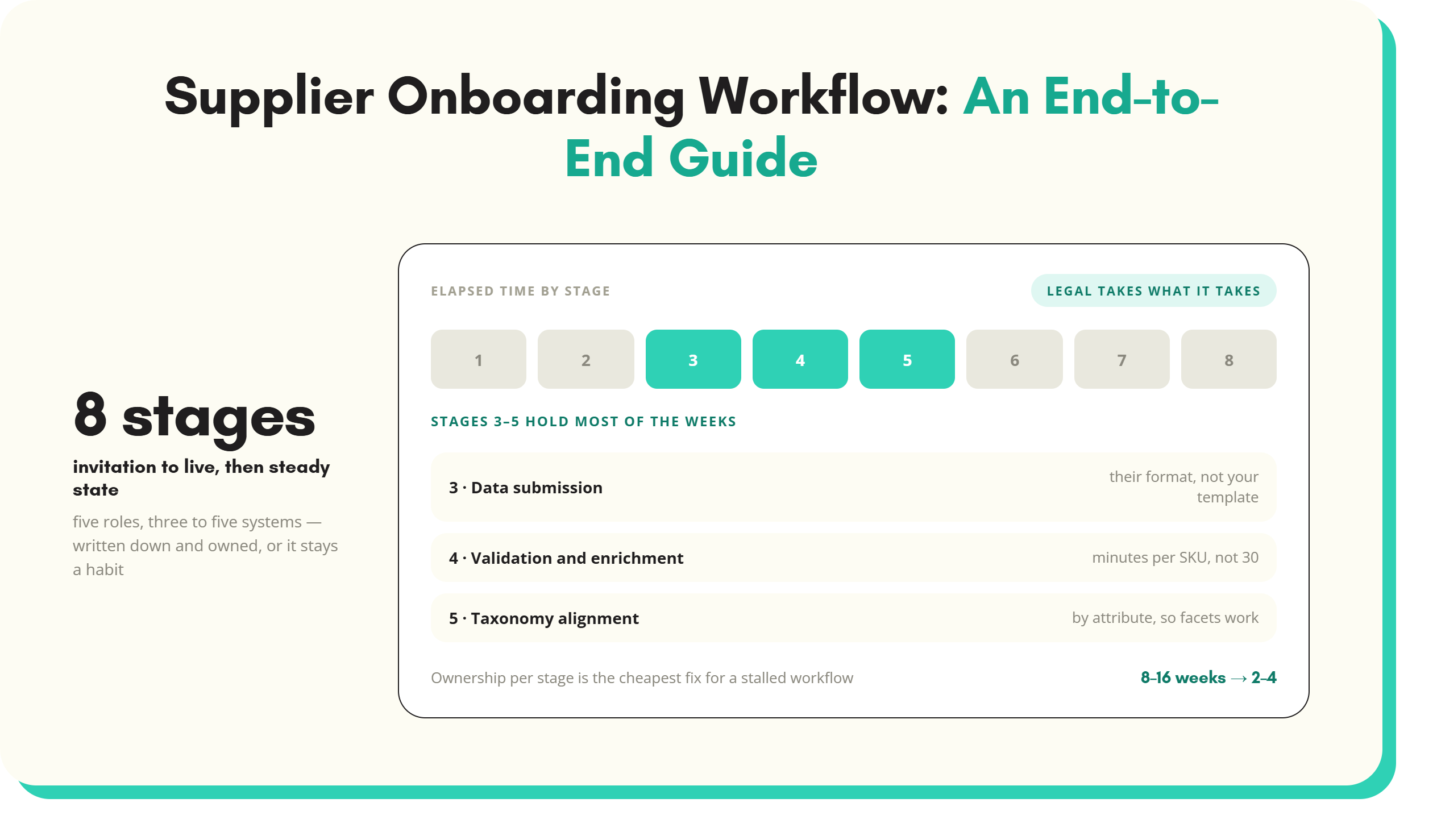
A documented supplier onboarding process turns that habit into something you can measure, improve, and scale.
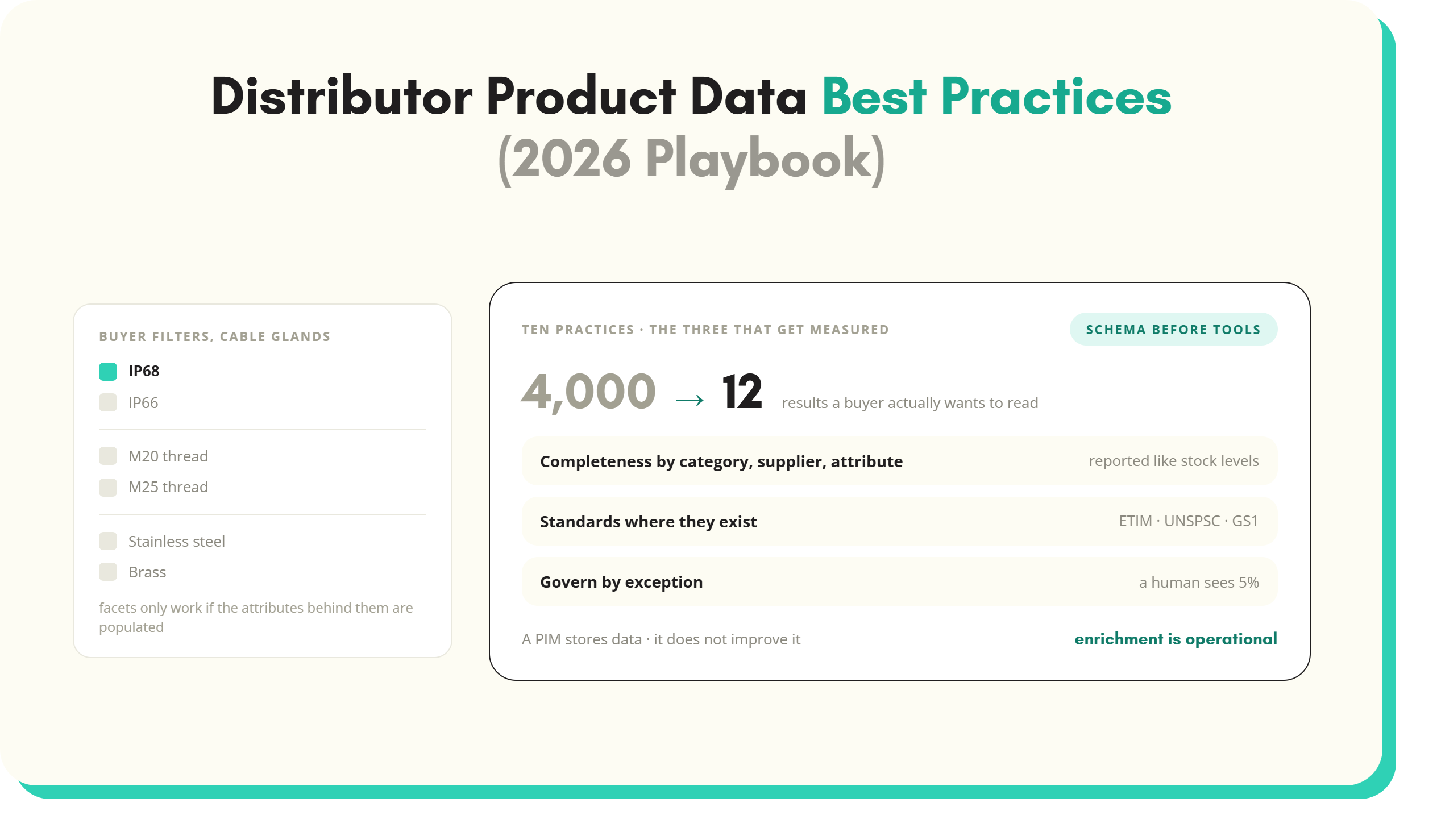
This playbook sets out ten practices that make the difference between a catalogue that supports growth and one that constrains it.
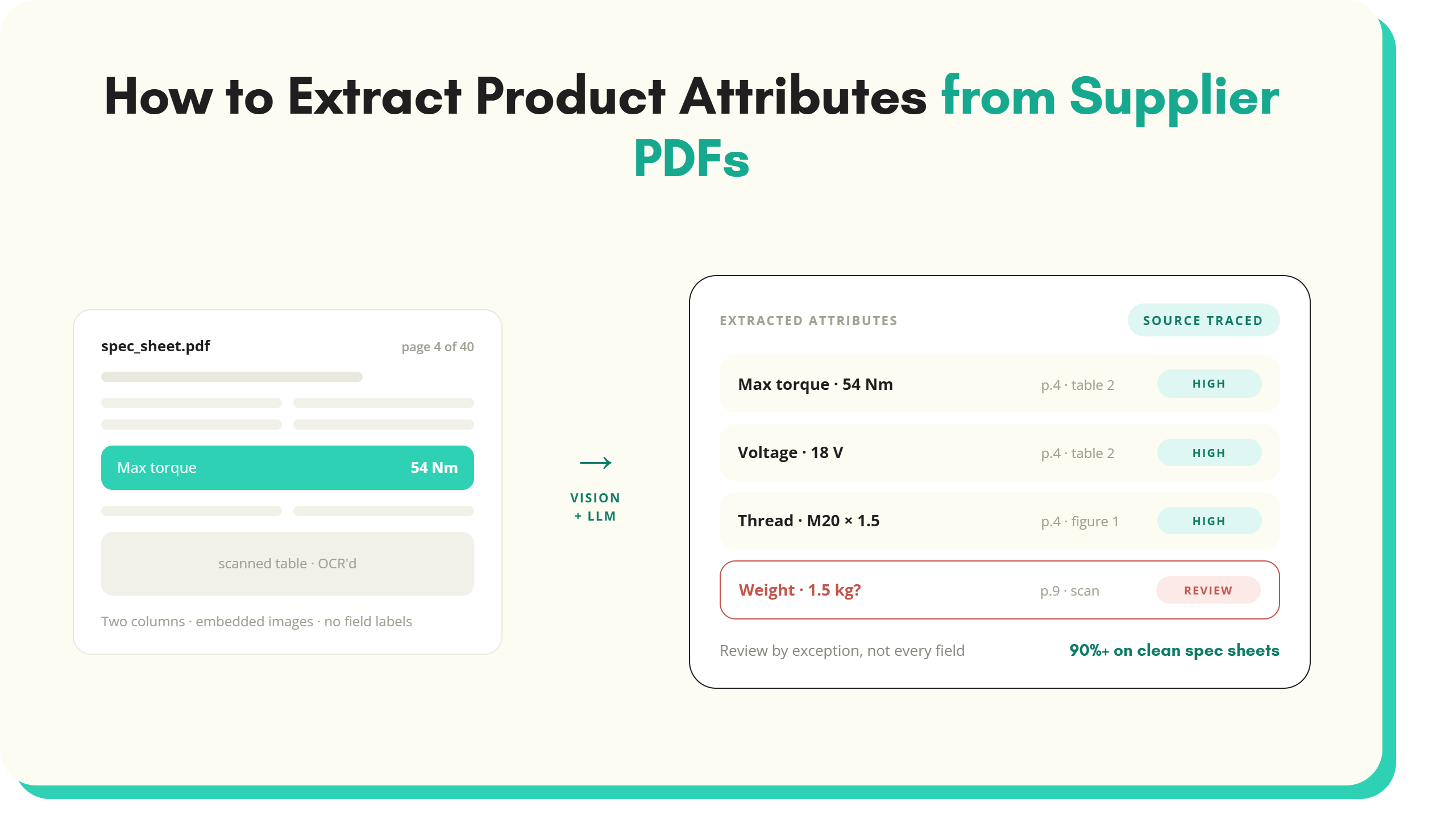
Supplier PDFs are the hardest format most product data teams deal with.
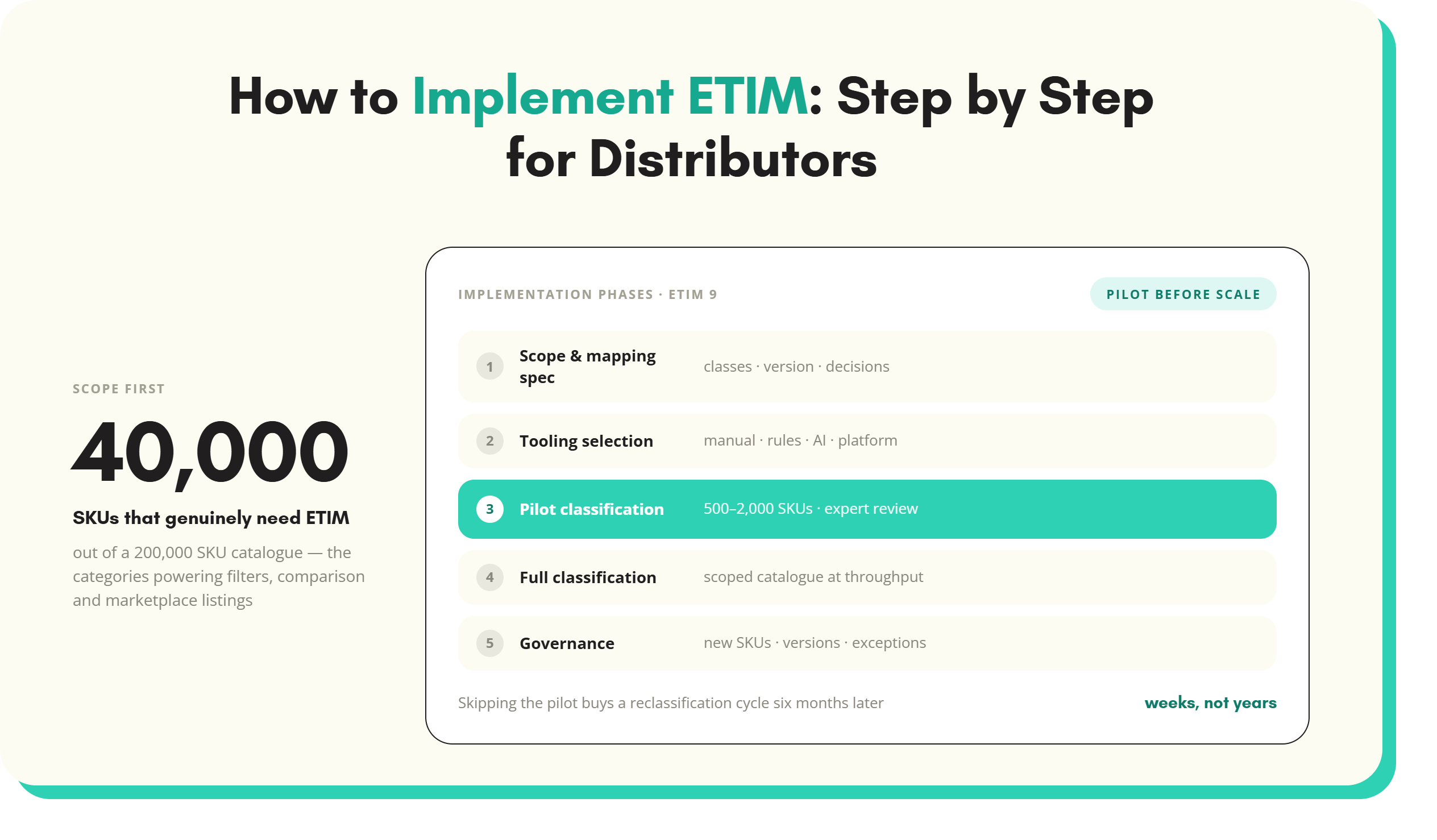
ETIM implementation fails more often from poor scoping than from technical problems.
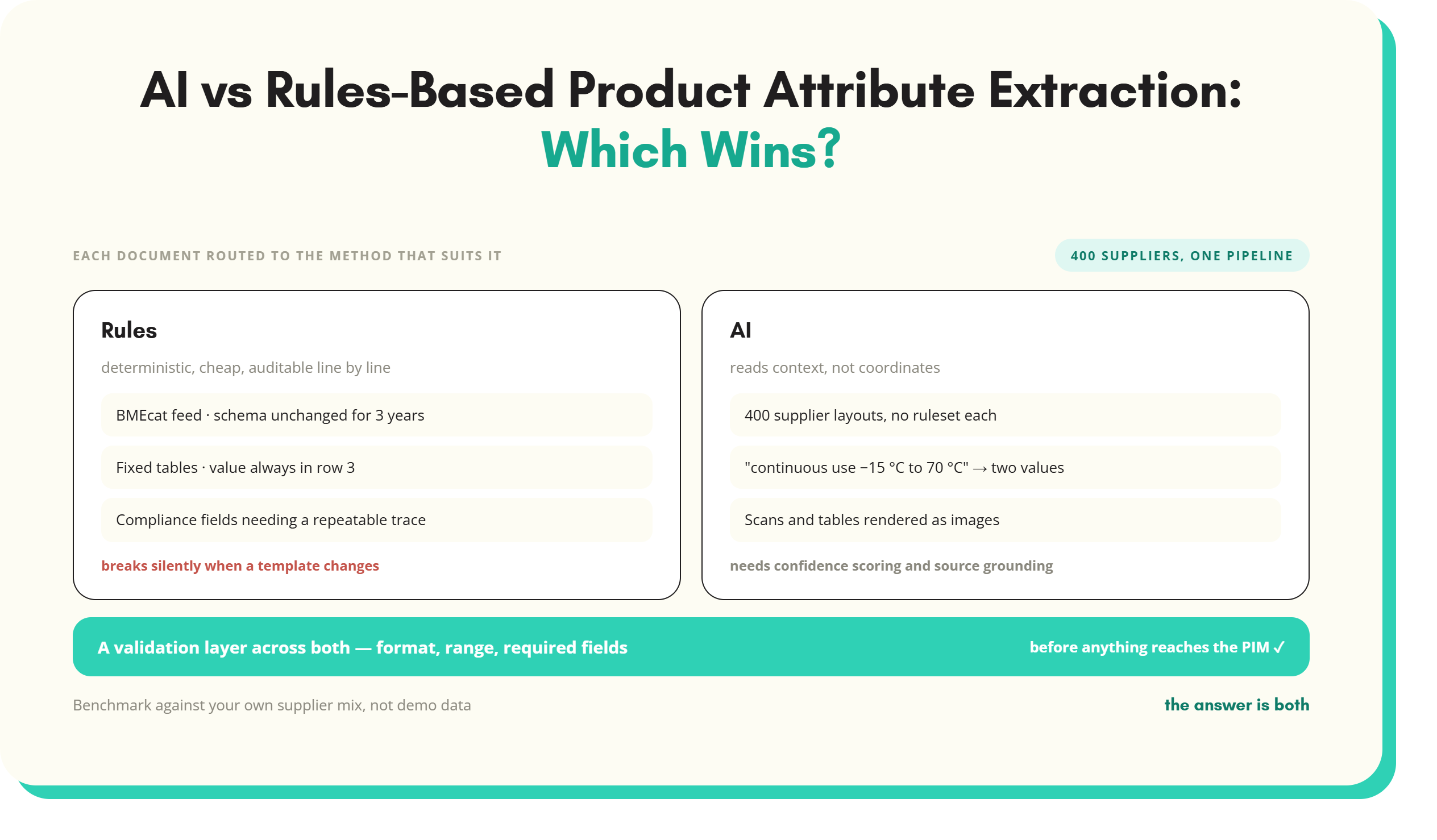
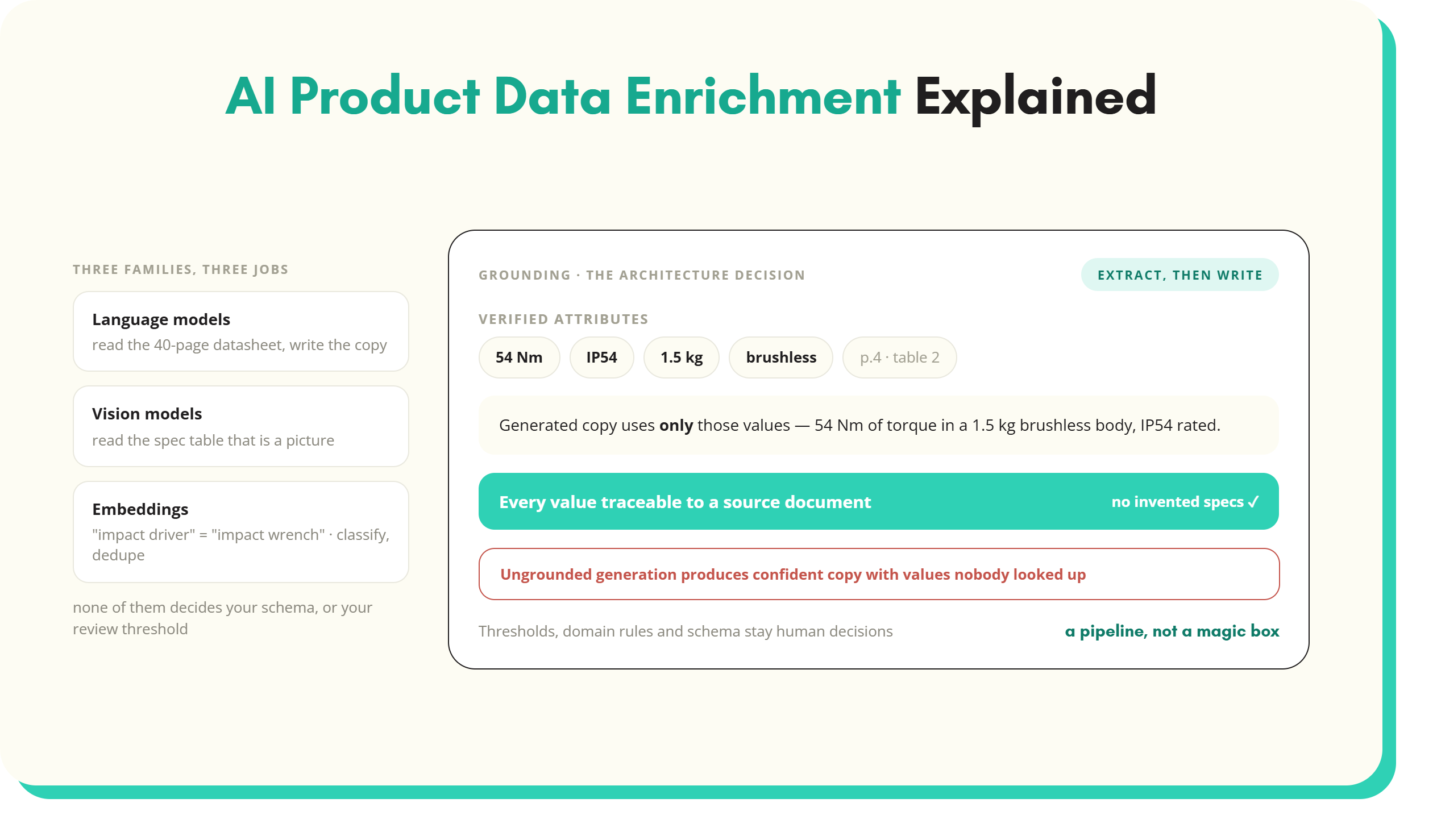
Most teams hear ‘AI product data enrichment’ and picture a single ‘magical’ system that can read a supplier PDF and fill the catalogue from end to end
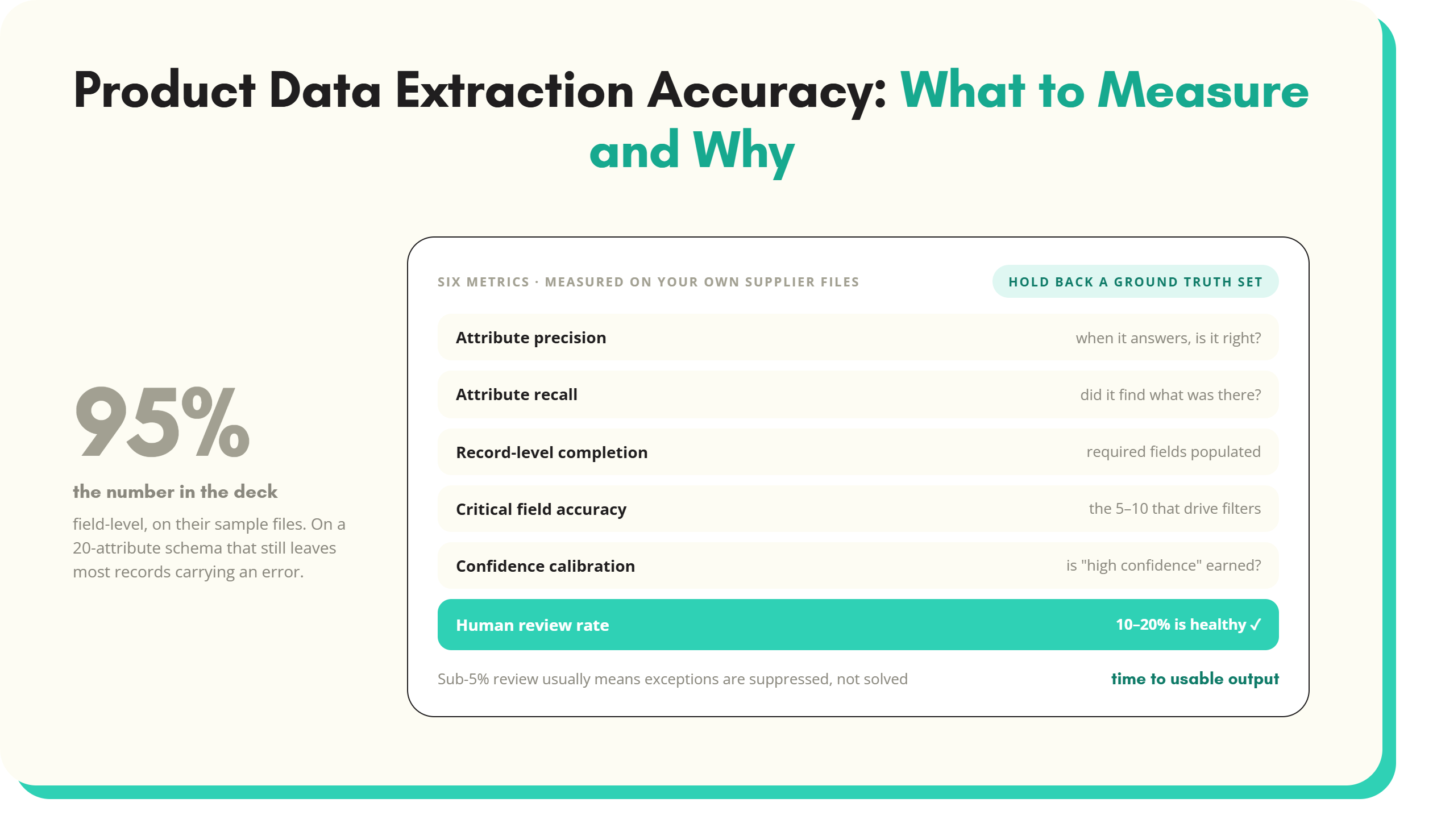
Most vendors quote a single accuracy number. Often 95%. Sometimes higher. Then you run a pilot on your real supplier data and that figure collapses.
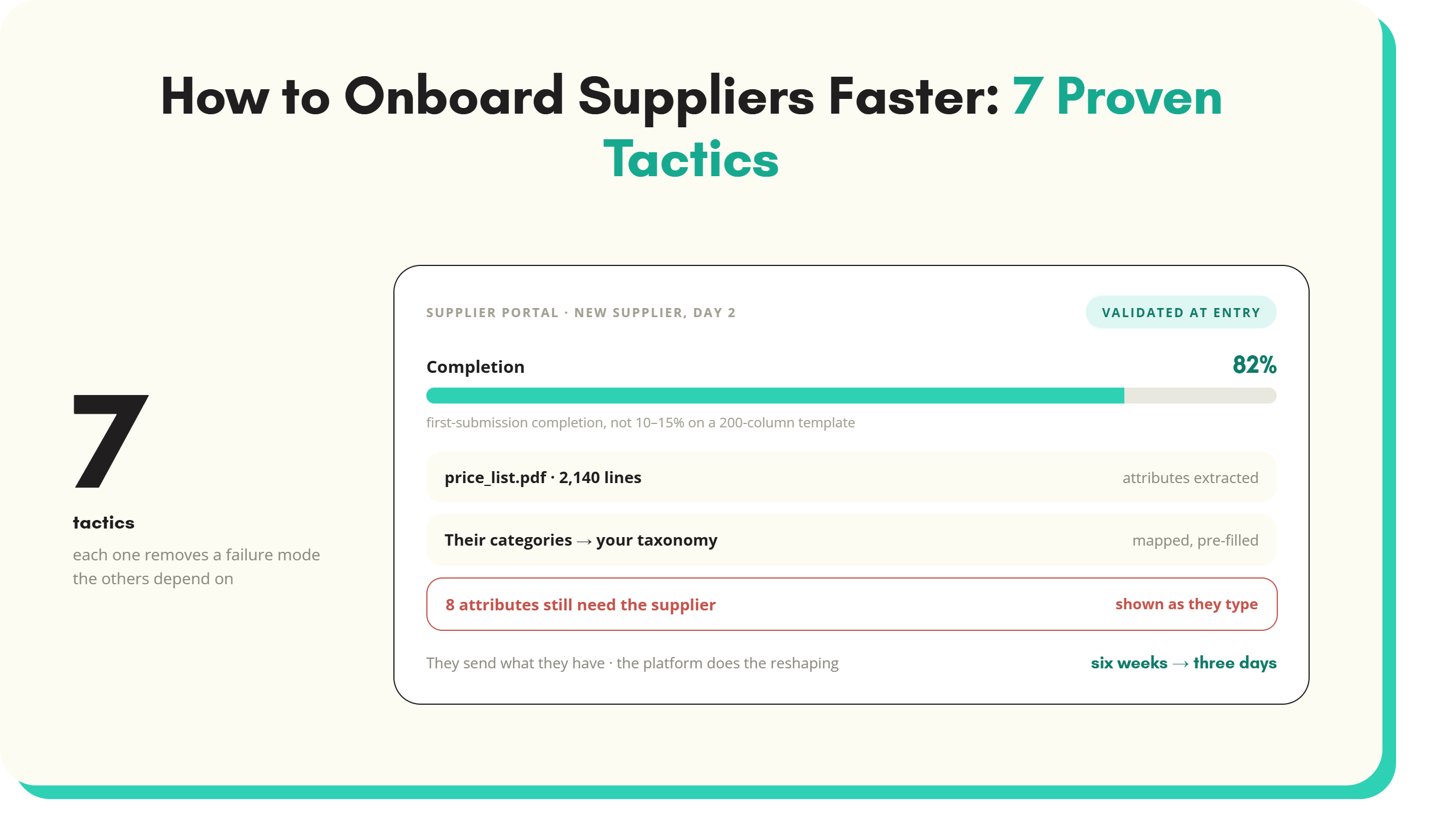
Most teams running a supplier onboarding process know it is slow, but very few have stopped to count how slow.
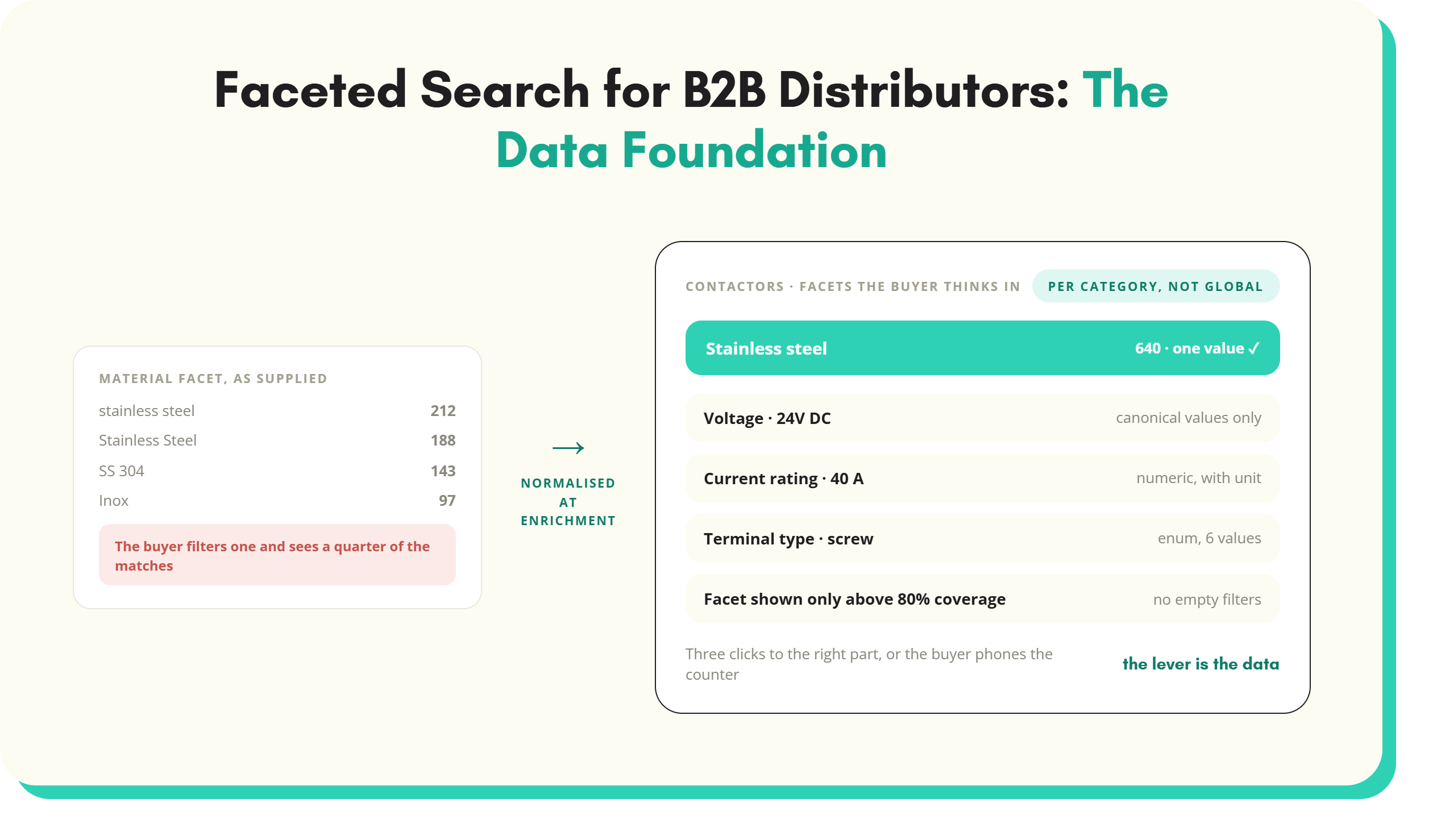
How facets are built from product attributes, why filters show duplicate values, how to handle facet URLs for SEO, and how to audit them.
Everyone says the answer is a PIM. Work out which part of your process is actually broken first.
Five levers, what each is worth in pounds, and a model you can run on your own catalogue in an hour.
A product specification sheet template that splits the spec into filterable attributes rather than one long string.
A supplier new line form with eighteen fields instead of two hundred, and the reasoning behind every one of them.
A catalogue template that scores completeness on every row, so your enrichment backlog sorts itself in seconds.
The Shopify product CSV format explained, with all forty one columns and the handle rule behind most failed imports.
A Google Shopping feed template with every required attribute, the apparel rules and the causes of disapproval.
A wholesale line sheet built from what buyers actually order from: price, margin, case pack, minimums and terms.
One row per product, twenty two columns, and the five formatting rules that stop a supplier file failing at import.
A WooCommerce product CSV template covering variable products, attribute pairs and the parent column that groups variants.
A BigCommerce import template with the core columns, category path formatting and the product and SKU row order.
How Amazon flat files are structured, why the template must come from Seller Central, and what suppresses listings.