
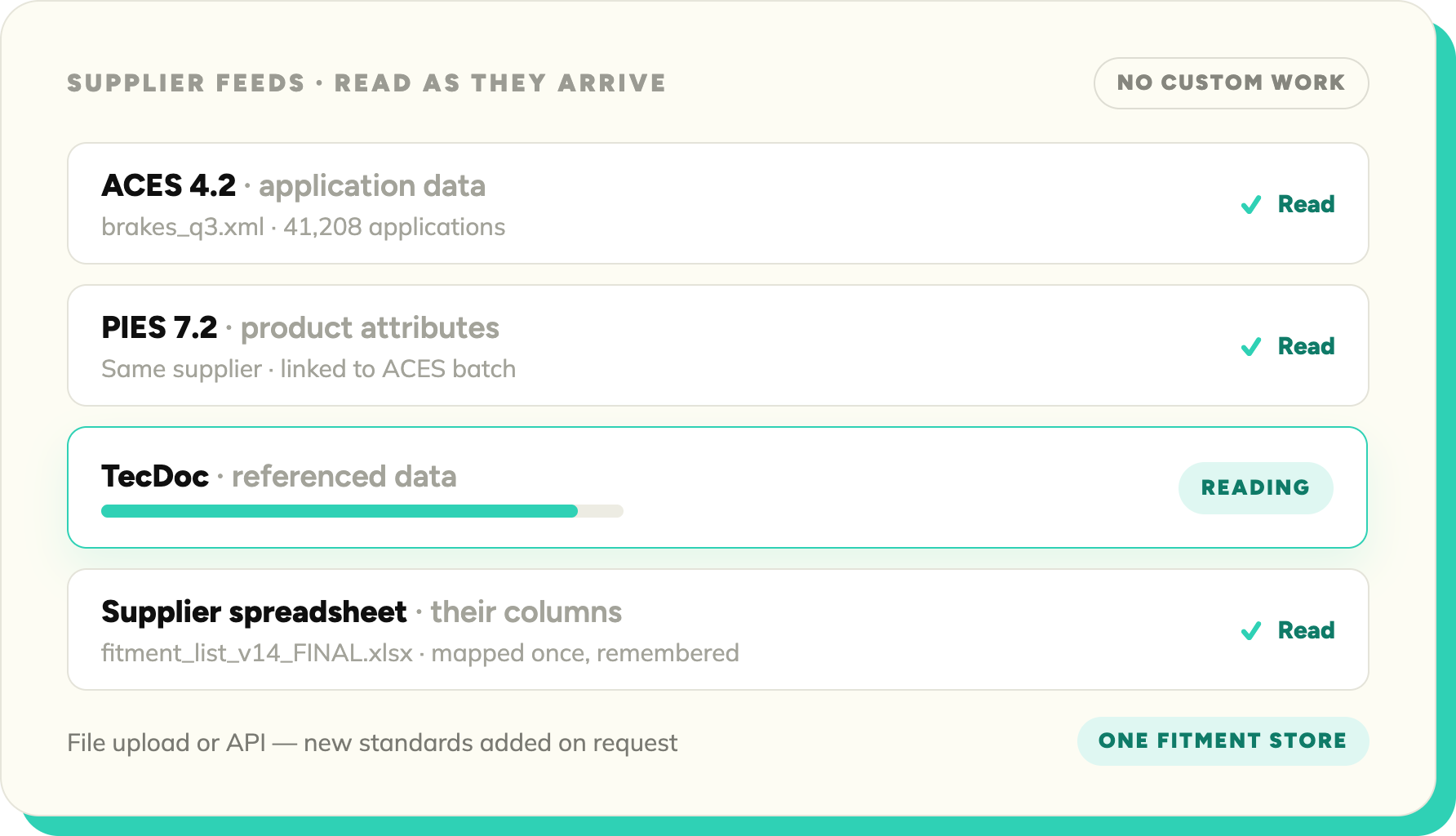
Every part linked to the vehicles it fits. SKULaunch reads the main industry fitment standards, from ACES and PIES to TecDoc, and stores the results as applications and fitments you can search, edit and publish.
Fitment data arrives in a dozen formats, and every supplier sends a different one. SKULaunch reads them and structures each into applications and fitments your team can search, filter and export.
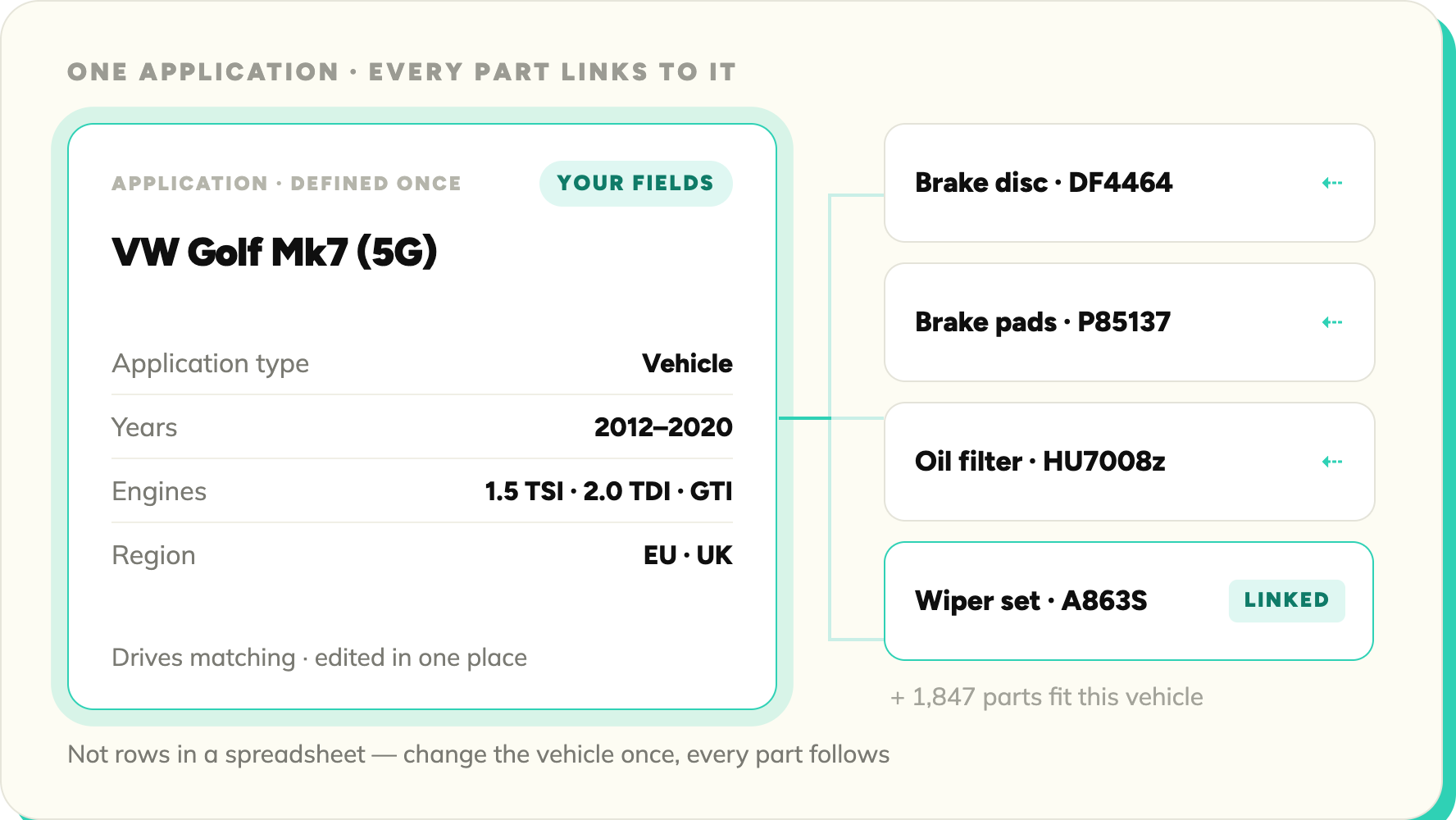
Every vehicle is stored once as an application: manufacturer, primary designation, model, year range and engine, in whatever application types you define.
Each part links to its applications through fitment records that carry relationship, quantity, fitting position and fitting notes, so the same part can fit hundreds of vehicles without duplication.
Fitment sits alongside the rest of your product data, so enrichment, validation and publishing all work on fitment records too.
SKULaunch reads the main fitment standards used in automotive and parts distribution. Supplier spreadsheets come in the same way.

A vehicle is defined once and every part that fits it links to that single definition. You control the model: application types for vehicles, trailers or anything else, your own fields on each, and your choice of which fields drive matching.
Add the Fitment Module to your SKULaunch subscription for a fixed monthly price, from £499 a month. It runs inside your existing workspace from day one.
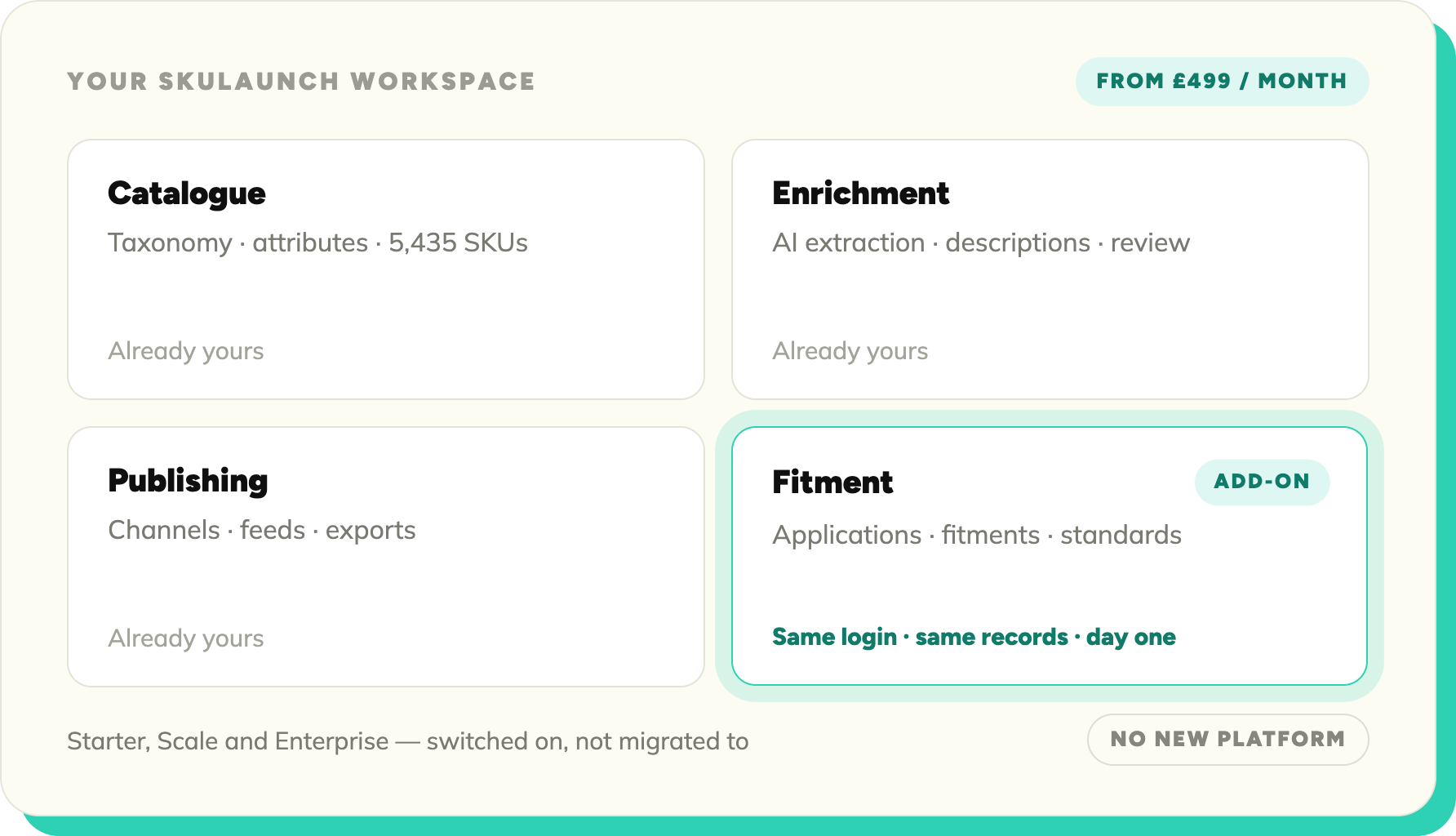
The Fitment Module is one component. See what it plugs into.
Capture data directly from your suppliers, mapped and normalised as it arrives.
Explore →Upload files and let AI map columns, flag issues and structure records.
Explore →Bring in ETIM, BMEcat and GS1 feeds and map them to your schema.
Explore →Book a demo and we'll show the Fitment Module running on parts like yours.

The AI product data platform that turns messy supplier files into sales-ready content. Run it upstream of your PIM, or run it as one.
