
A PIM you set up yourself in days, not months. Every attribute, asset and channel value on one central record, with variants modelled the way you actually sell.
Your products live in ERP exports, supplier files and channel spreadsheets, and no two agree. SKULaunch gives every product one central record that every team, supplier and channel works from. Standalone, or as the core of the full pipeline.
Every attribute, description, asset and channel value in one place. Change it once, it's changed everywhere.
Parents and children done properly. Shared attributes inherited, differences captured at variant level, any axis.
AI-suggested category trees and attribute schemas keep every record structured from day one.
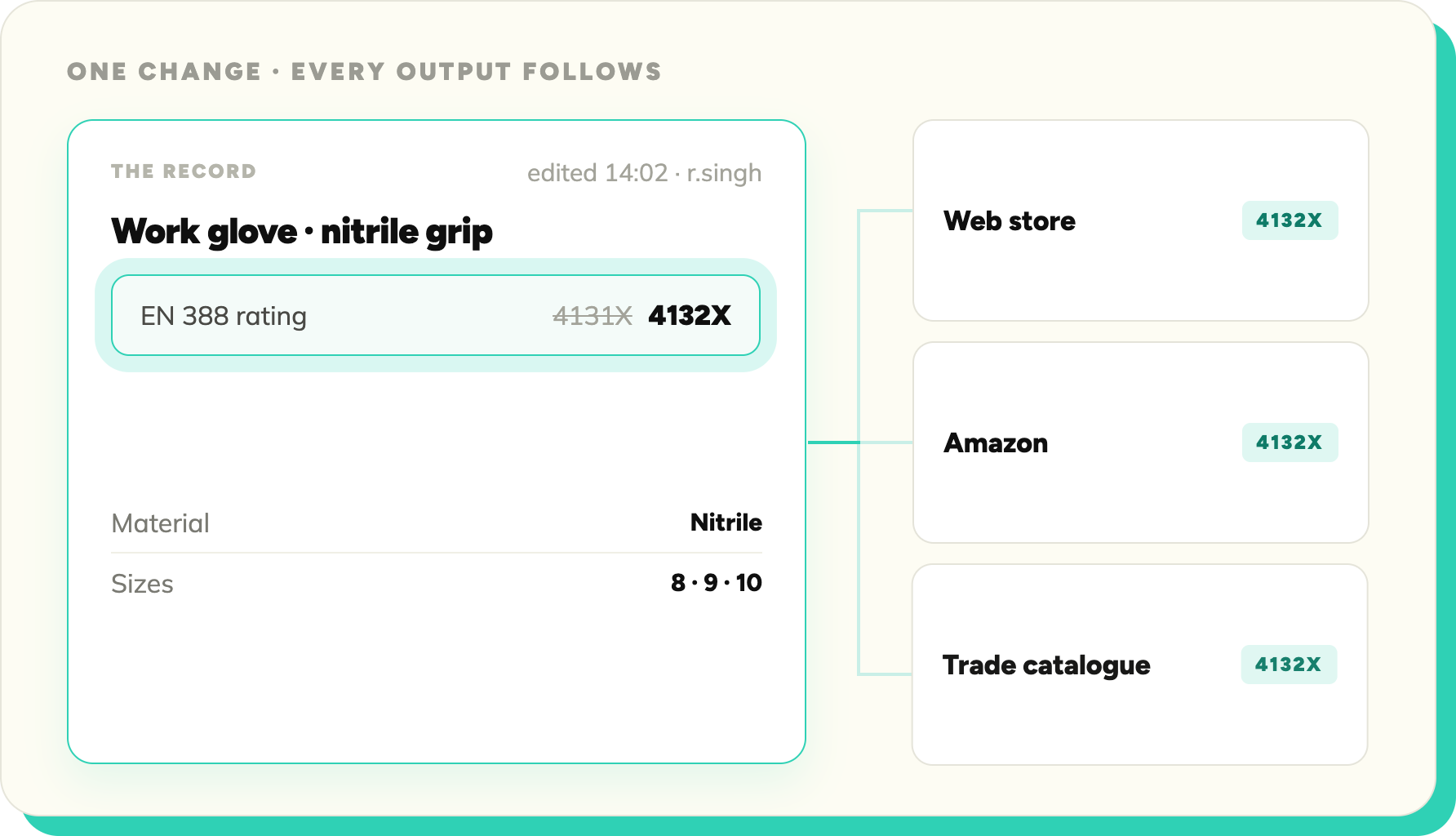
A catalogue managed in spreadsheets forks every time someone hits Save As. SKULaunch holds one record per product and everything reads from it: your team edits it, suppliers feed it, channels publish from it. When a spec changes, it changes in one place and every output follows.

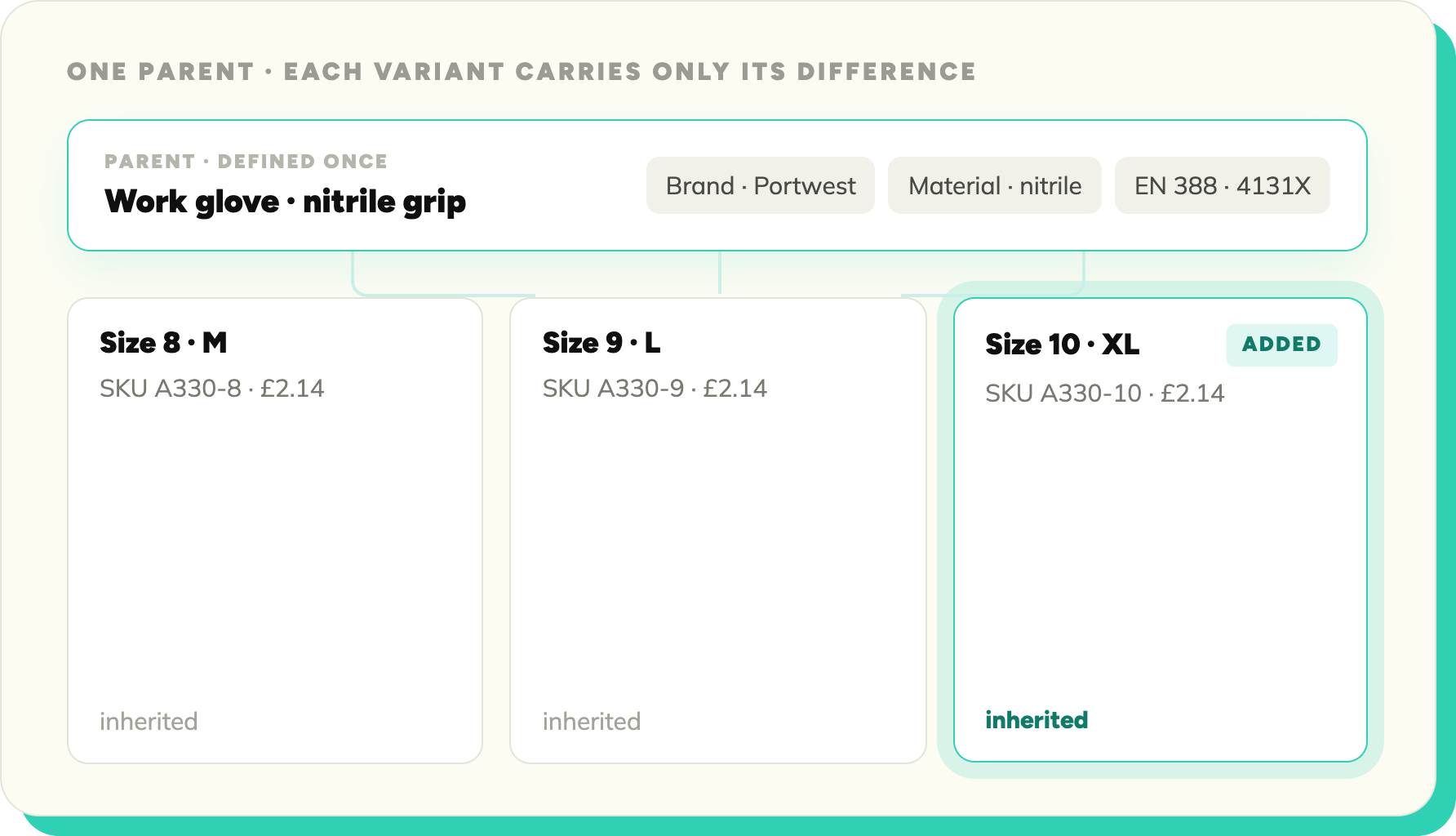
Variants are where spreadsheet catalogues fall apart: fifty rows repeating the same brand and material, differing only in one column. SKULaunch models the parent once and lets each variant carry only what makes it different. Add a size without rebuilding the product.
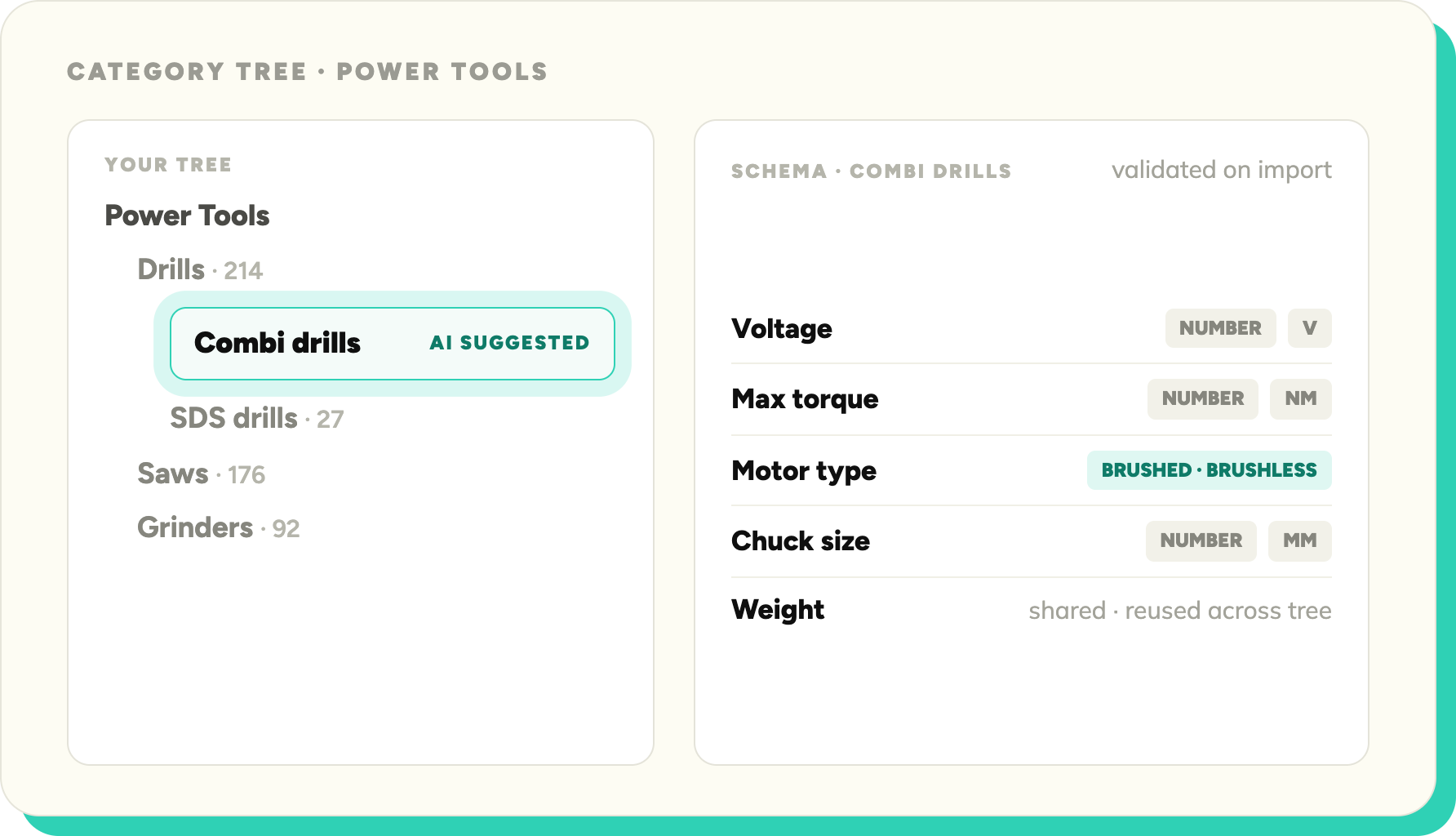
A PIM is only as good as its structure, and structure is the part teams put off. SKULaunch's AI suggests the category tree and the attribute schema for each category: field names, types, units, accepted values. Edit what it suggests, and your records are validated against it from the first import.
PIM sits at the core of Data Structure. Explore the rest.
Yes, for a growing share of its customers. SKULaunch holds one governed record per product, with schema and taxonomy management, variant modelling, completeness scoring and channel syndication built in. Teams with an existing PIM run SKULaunch upstream of it, enriching supplier data before it lands. Teams without one run SKULaunch as their PIM, and skip the six-month implementation a traditional system needs.
For many mid-sized retailers and distributors, yes. If the job is one governed record per SKU, proper variants, a validated attribute schema and clean pushes to your channels, SKULaunch covers it and you set it up yourself in days. Teams that rely on deep approval workflows, print channel management or enterprise governance keep their dedicated PIM and run SKULaunch in front of it instead.
It starts one step earlier. A traditional PIM expects clean, structured data to arrive. SKULaunch creates it: reading supplier PDFs, spreadsheets and images, extracting and normalising attributes, and generating channel-ready content. The PIM layer then holds the finished record. One tool covers the pipeline most teams otherwise assemble from two systems.
Book 30 minutes. Bring your messiest category and we'll set it up as central records with variants modelled, live in the session.

The AI product data platform that turns messy supplier files into sales-ready content. Run it upstream of your PIM, or run it as one.
.avif)