
Product data completeness tells you how much of what each product needs is actually filled. SKULaunch measures completeness by category and by channel, against the attributes each one requires, so you know exactly where the gaps are and which matter most.
The problem
Most teams cannot say how complete their catalogue is. When they try, they use one number across everything, which hides the truth: 70 per cent overall can mean lighting is nearly perfect and fixings are barely started. Without a breakdown, effort goes to whoever shouts loudest rather than where gaps cost sales.
Before and after
An illustrative example from a quarterly review.
Before: the headline
"Catalogue completeness is about 70 per cent." No breakdown. No agreement on what counts as complete.
After: in SKULaunch
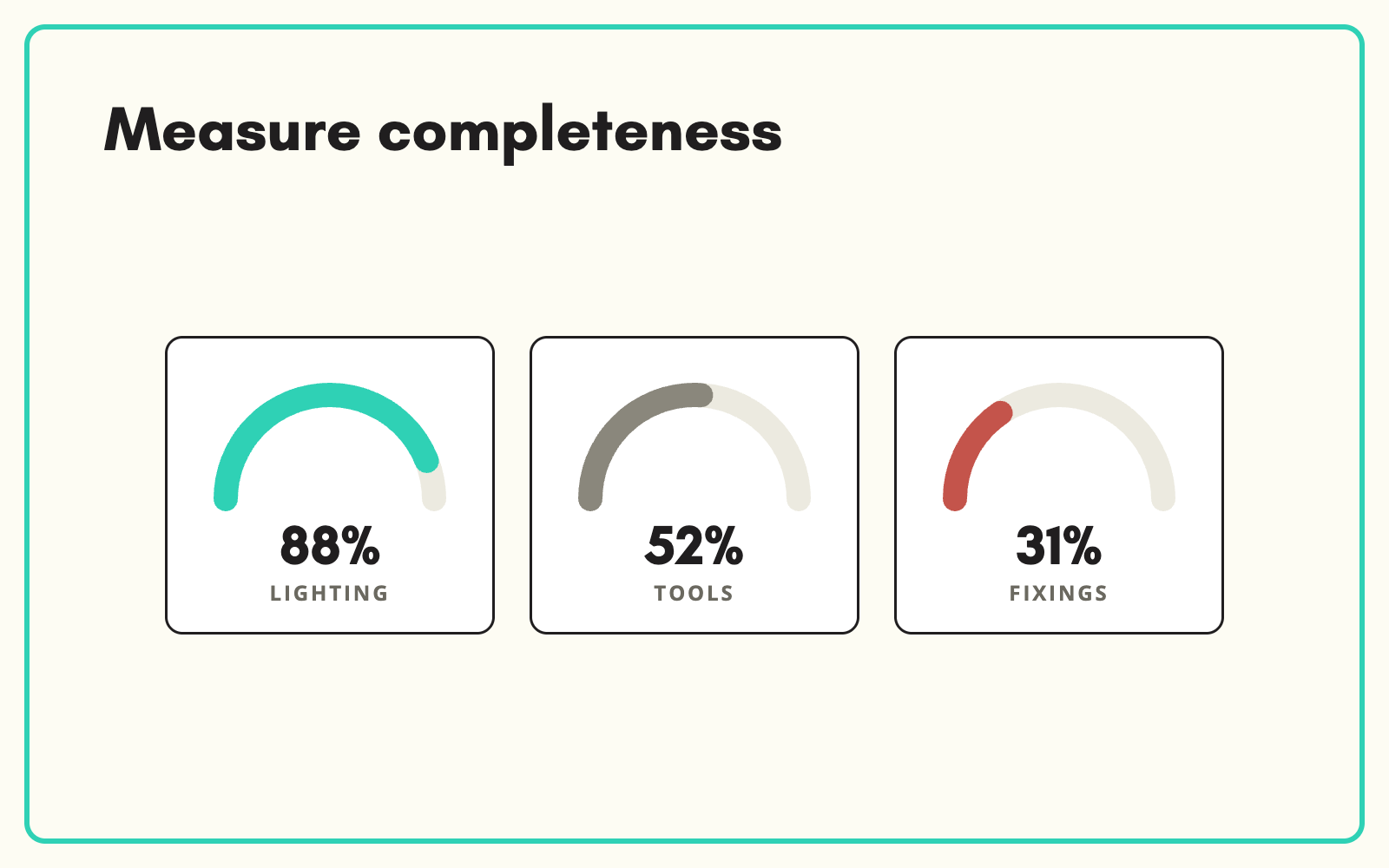
- Lighting: 88 per cent against its required attributes
- Power tools: 52 per cent, with run time and voltage the main gaps
- Fixings: 31 per cent, the clear priority
- Marketplace channel: 64 per cent ready, website: 79 per cent
How it works in SKULaunch
- Define what complete means. Mark required attributes per category and per channel.
- Measure automatically. Completeness is calculated for every product against its own requirements.
- Filter by completeness. Find products below a threshold, by category, supplier or channel.
- Act on the gaps. Send low-scoring products to enrichment or back to the supplier.
Measure against requirements, not every field
Completeness against every attribute is a vanity number. Completeness against what a category and channel actually require is a management tool. Agree the required set with the people who use the data, merchandising, marketplace and search, and the number starts to mean "ready to sell" rather than "has lots of fields filled".
What changes
You know which categories need work, can prioritise by impact and can show progress in numbers.
Common questions
Can completeness differ by channel?
Yes. Each channel can have its own required attributes.
Can we filter by completeness?
Yes, by threshold, category, supplier or channel.
Does it update automatically?
Yes, as values are added or approved.
See product data quality, filling missing attributes, and incomplete product data.

.avif)