
Trusted Enrichment: AI product data enrichment
you can check
Trusted Enrichment is how SKULaunch enriches product data with AI and shows its working. Every proposed attribute value links to the source it came from, the evidence on that source, how it was read and the decision a reviewer made. When sources disagree you see both. Nothing is published blind.
Why a filled field isn't a verified fact
A catalogue can be 98% complete and still be wrong in the places that matter. Most AI enrichment tools return tidy, confident tables with no trail behind them. You cannot tell which values were read from a datasheet, which were copied from an older version of the product and which were simply likely. So teams either recheck everything by hand, or publish errors to every channel, where marketplaces and AI shopping assistants repeat them.
How the SKULaunch Trust Graph works
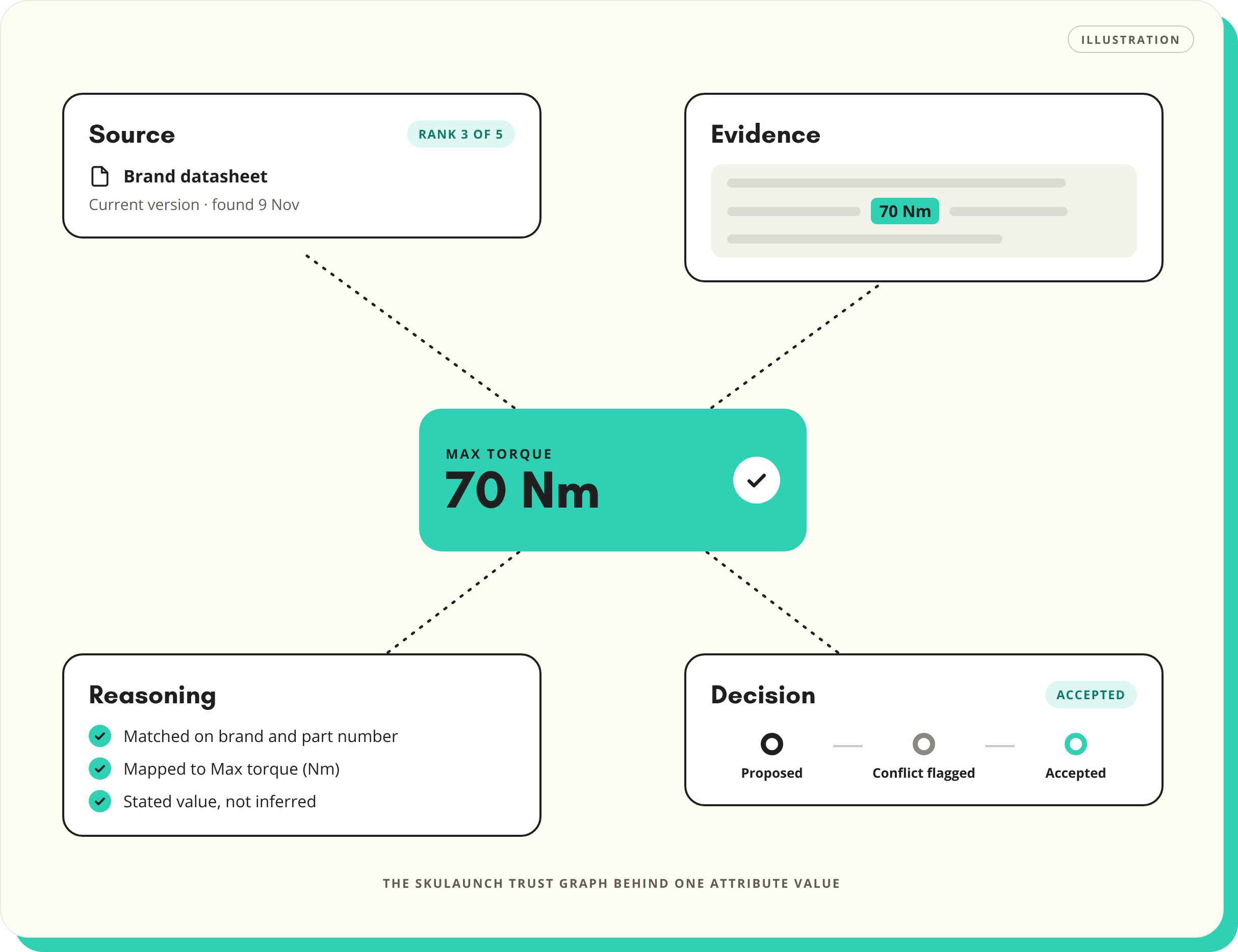
Every value Trusted Enrichment proposes is recorded in the SKULaunch Trust Graph, so you can trace any attribute back to where it came from and why it was accepted.
Source
Your rules decide which sources are trusted. Rank your approved data, supplier files, manufacturer documents, trusted domains and the open web, by category or by attribute.
Evidence
The passage, table or image region on the source is kept with the value, with the date it was found.
Value and reasoning
How the product was matched, which attribute the value maps to and any conversion applied. Stated and inferred values are labelled differently.
Decision
Accept, edit or reject. Every decision records who made it and when.
What happens when sources disagree
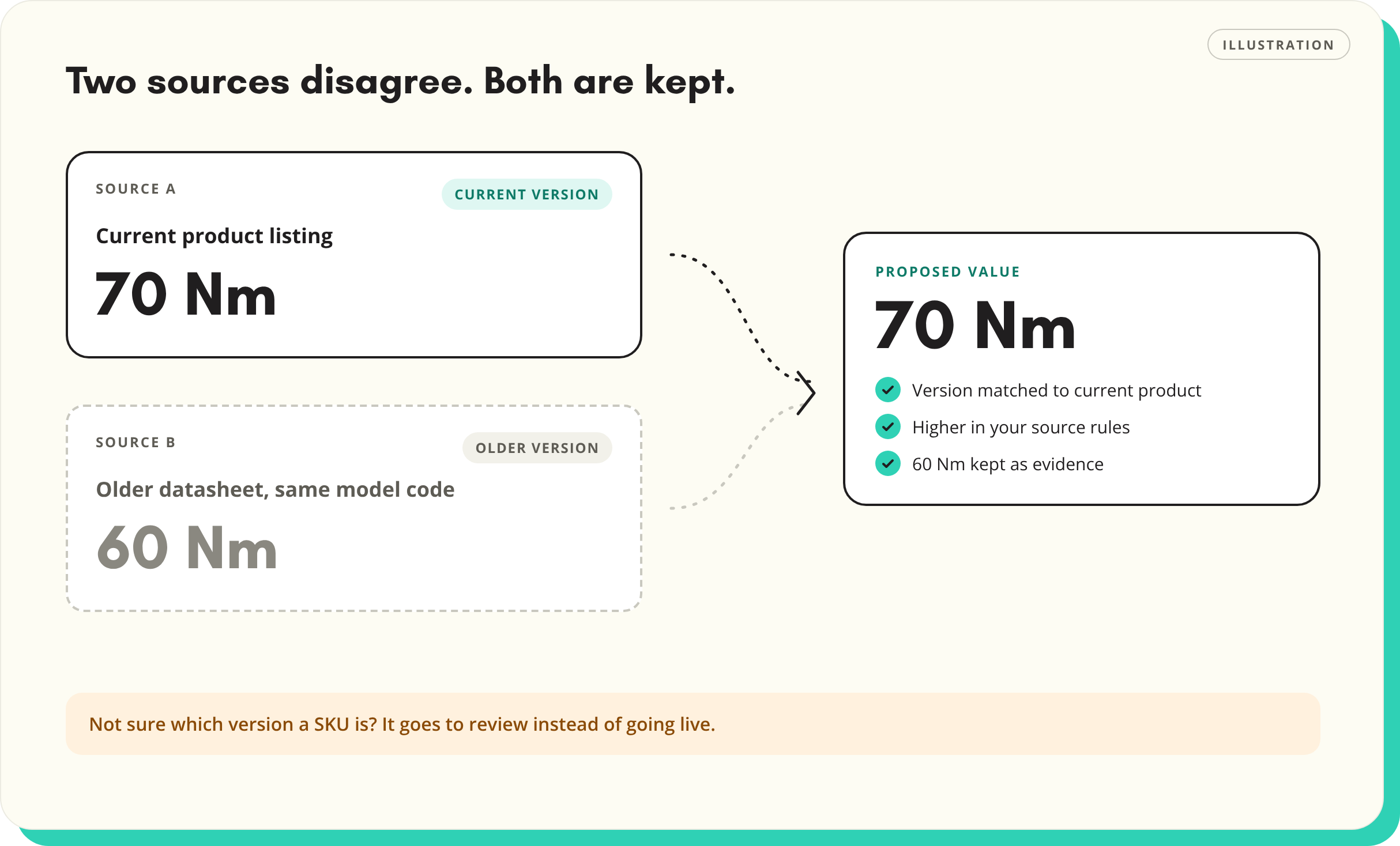
Take the DeWalt DCD796 cordless drill. Current listings give a maximum torque of 70 Nm. An older datasheet for the same model code gives 60 Nm. Trusted Enrichment keeps both. The 70 Nm value is proposed because it is tied to evidence for the current version, from a source your rules rank higher. The 60 Nm value stays on the record as conflicting evidence. Any SKU that cannot be confidently matched to the current version goes to review instead of going live.
Built for technical catalogues
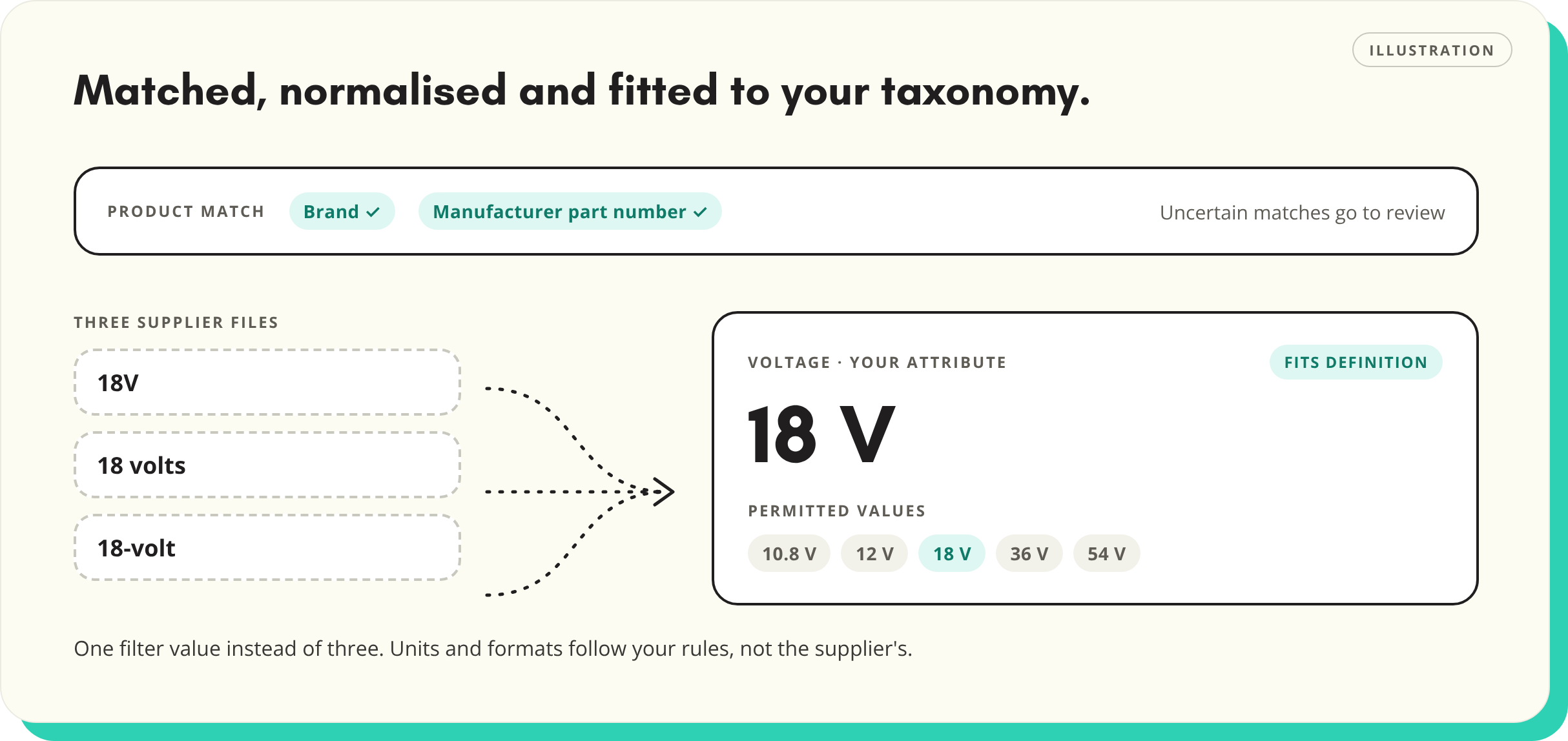
Trusted Enrichment is designed for catalogues where one wrong specification costs a return, a failed compliance check or a broken filter.

Review where the risk is
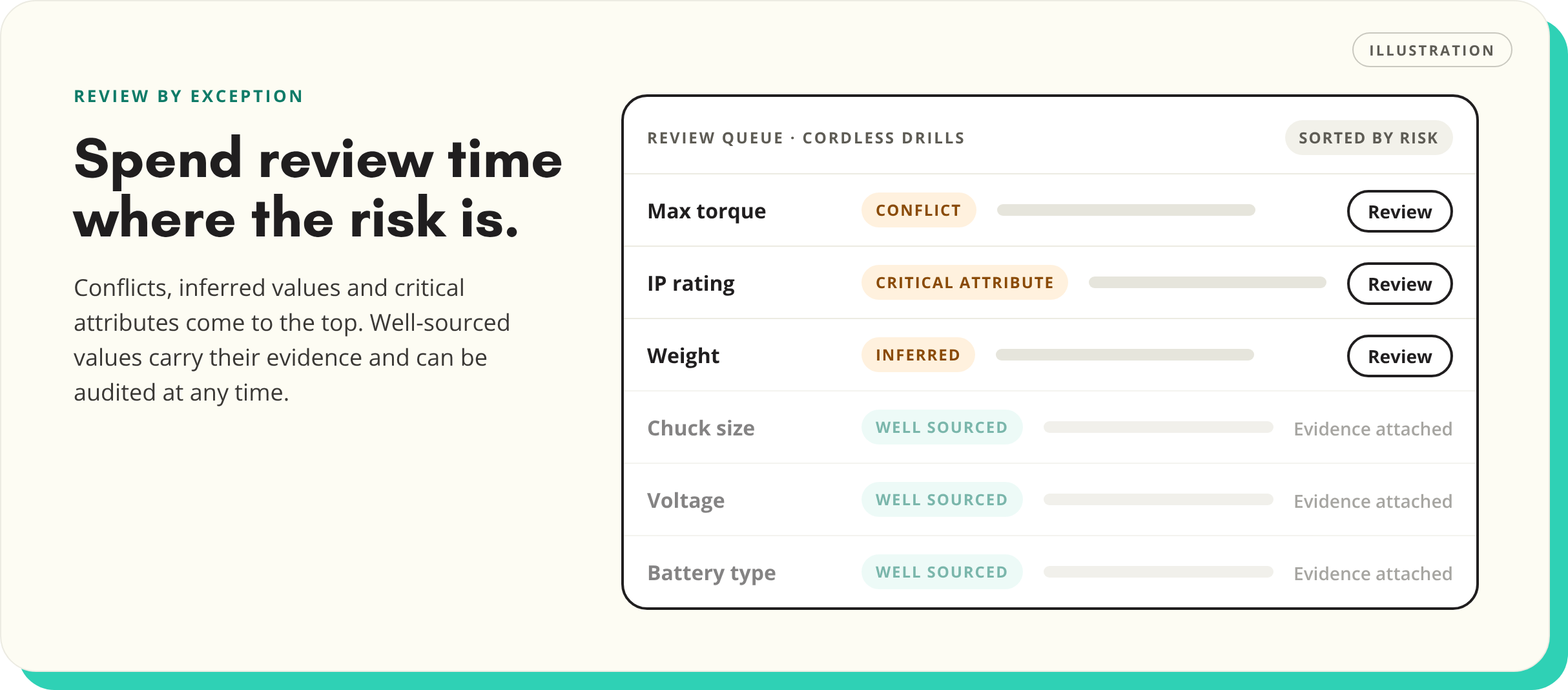
Nobody has time to check 20,000 values one by one. Trusted Enrichment sends the straightforward, well-sourced values through and puts your team's attention on conflicts, inferred values and the attributes you mark as critical. Every value can still be audited later, because its evidence travels with it.
How Trusted Enrichment differs from a general AI tool
Frequently asked questions
What is Trusted Enrichment?
Trusted Enrichment is SKULaunch's AI product data enrichment that records the source and evidence behind every attribute value. Each proposed value carries its source, the evidence from that source, how it was derived and the review decision, so your team can check any value before it is published.
What is the SKULaunch Trust Graph?
The SKULaunch Trust Graph is the record behind each value: the source, the evidence, the value and its reasoning, and the decision. It is what lets you trace any attribute back to where it came from.
Can I control which sources SKULaunch trusts?
Yes. Source priority is configurable, so you can rank your own approved data, supplier files, manufacturer documents, trusted domains and the open web, and set different rules by category or attribute.
What happens when two sources give different values?
Both values are kept with their evidence. Your source rules decide which is proposed, and anything the rules cannot settle is flagged for review rather than averaged or guessed.
How is this different from using ChatGPT?
A general AI tool returns a value without a traceable source, product match check or review trail. Trusted Enrichment ties every value to evidence, applies your taxonomy and source rules, and records who accepted it.
How can I try it?
Start a free one month trial on up to 1,000 of your own products. No card is needed.
Try it on 1,000 of your own SKUs
One month free, up to 1,000 products across up to three categories, no card needed. Upload your messiest supplier file and check the source behind every value.

The AI product data platform that turns messy supplier files into sales-ready content. Run it upstream of your PIM, or run it as one.
