
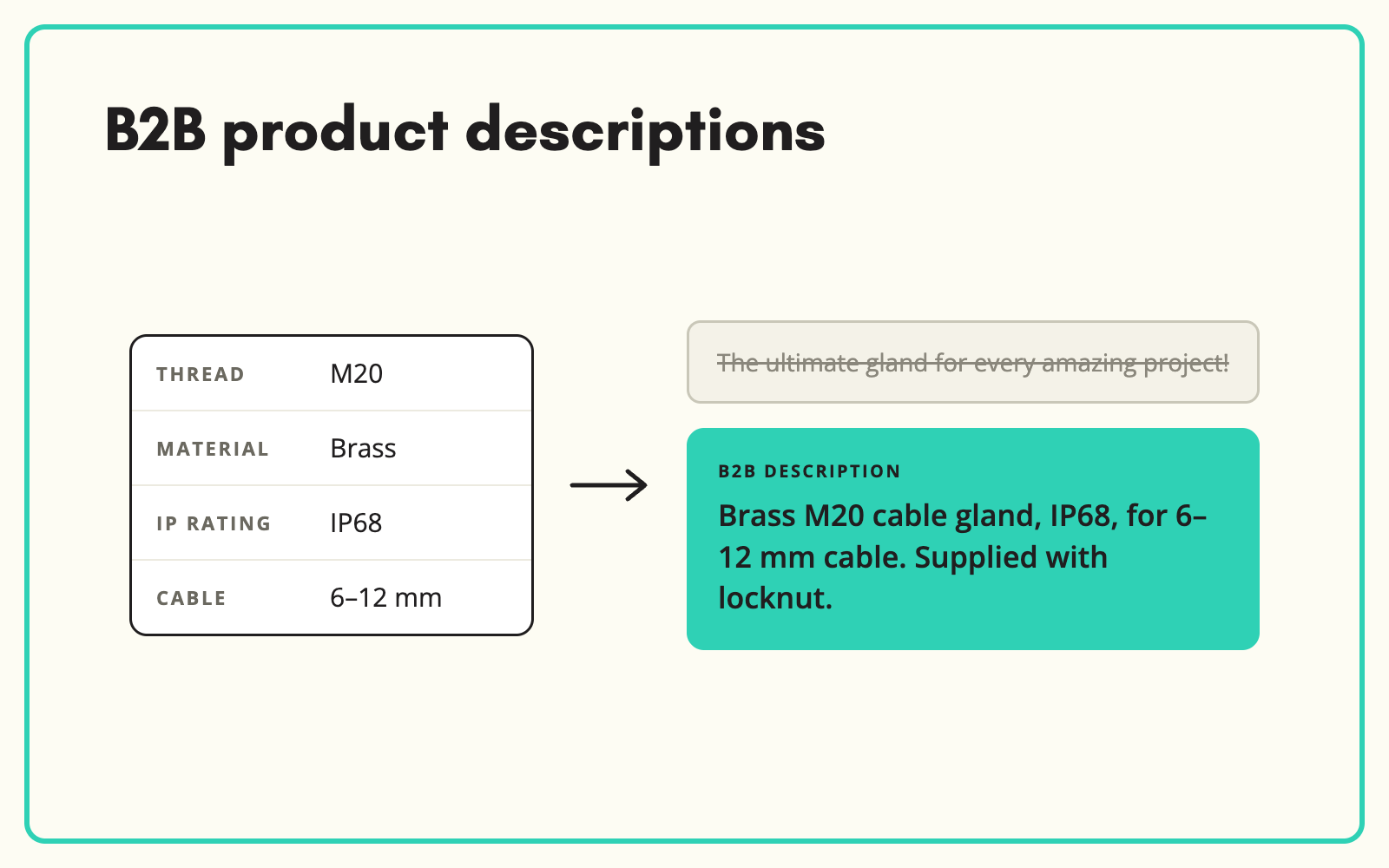
B2B product descriptions have one job: help a trade buyer confirm the product is right for the application. SKULaunch writes technical descriptions from each product's approved attributes, so every figure in the copy matches the specification, and nothing is invented to fill a paragraph.
The problem
Generic AI writing tools are built for consumer copy. Give them a part number and a short title and they produce fluent text with confident specifications that may not exist. In industrial, electrical and MRO catalogues that is worse than no description at all. An engineer or buyer who spots one wrong rating stops trusting the rest of the site, and a wrong spec on a compliance-critical product creates real risk. So teams either write by hand, slowly, or leave descriptions blank.
Before and after
An illustrative example for an industrial ball valve.
Before: a generic AI description
"This premium ball valve delivers outstanding performance in any application, built to the highest standards for years of reliable use."
After: written by SKULaunch from approved attributes
- Two-piece full bore ball valve in 316 stainless steel with PTFE seats
- 1 inch BSP female threaded ends, lever operated
- Rated to 63 bar, temperature range minus 20 to plus 180 degrees C
- Suitable for water, oil and compressed air
- Every value above taken from the product's approved attributes
How it works in SKULaunch
- Complete the attributes first. Descriptions are written after enrichment, from approved values, so the copy can only state what the data supports.
- Set the pattern for each category. Decide what a description covers for each product type, such as construction, ratings, connections and applications for a valve, and the tone your buyers expect.
- Generate in bulk. Content generation writes descriptions across a whole category, referencing only the attributes it is given.
- Review and approve. Descriptions are reviewed alongside the attributes they came from, so checking is quick.
What trade buyers read for
B2B buyers scan for fit, not persuasion. They want the product type and construction in the first line, then the ratings and limits that decide whether it suits the application, then connections, dimensions and standards. Adjectives such as "premium" and "high quality" carry no information for them. Good B2B descriptions read more like a well-written spec summary than an advert, and they repeat the key values that also appear in the specification table, because many buyers only read one or the other.
What changes
Descriptions stop being the blocker. Thousands of technical products get accurate, consistent copy, written from data you have already checked, and buyers can trust what they read.
Common questions
What stops the AI inventing specs?
It only writes from the attributes it is given. If an attribute is empty, the description does not mention it.
Can descriptions follow our style guide?
Yes. Tone, structure and terms to use or avoid are set per category.
Do we still need to review?
Yes, every description goes through approval. Because the facts come from approved data, review is a quick read rather than a fact-check.
See content generation, product data management for distributors, and industrial and MRO distributors.

.avif)