
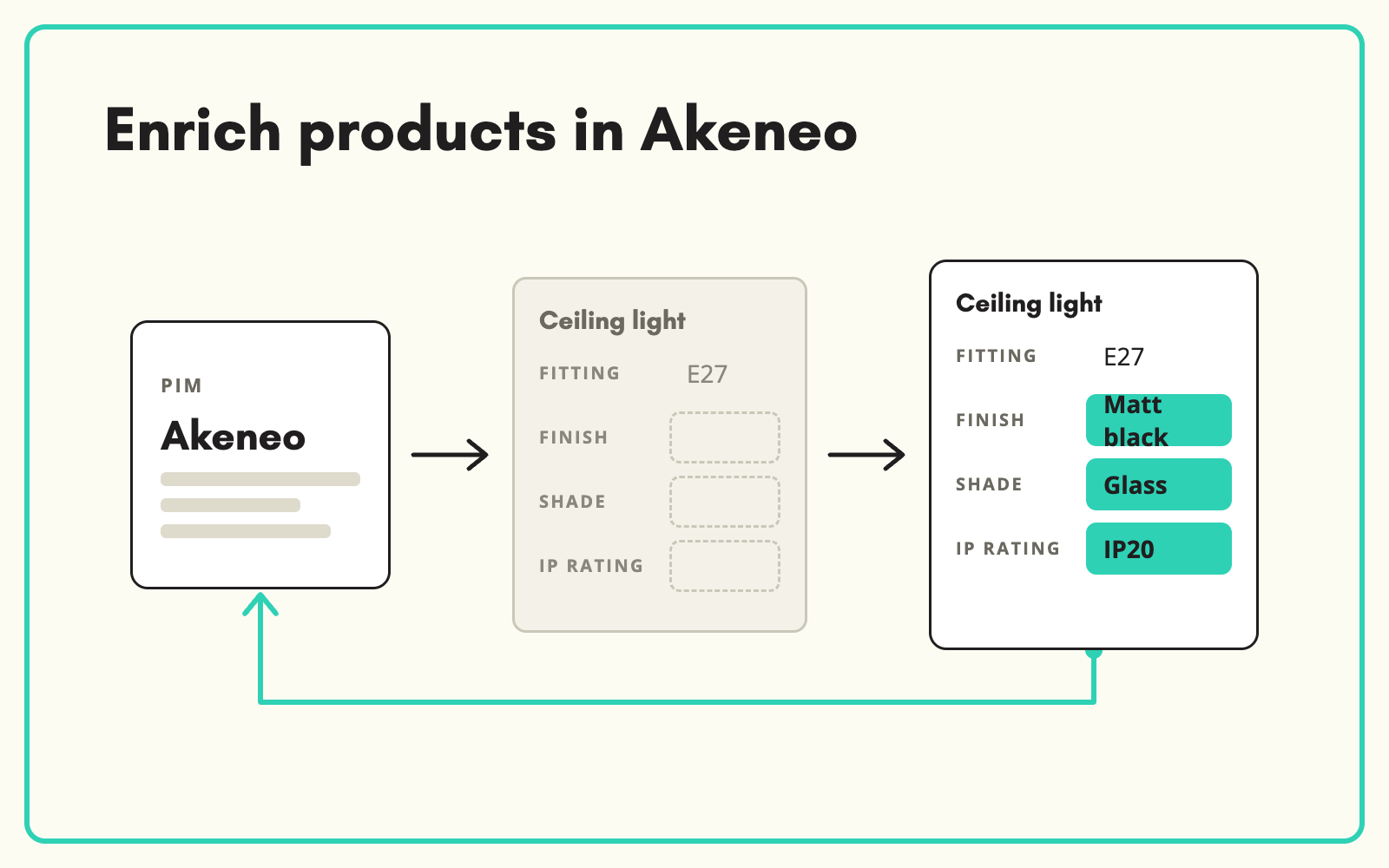
Akeneo is a strong PIM, but a PIM only holds what you put in it. SKULaunch pulls products out of Akeneo, fills the empty attributes and content against your families, and publishes the completed records back, so the PIM you already pay for finally holds complete data.
The problem
Many Akeneo projects go live with the structure built and the data half empty. Families and attributes are defined, completeness scores sit at 30 or 40 per cent, and the team fills gaps product by product in the Akeneo grid. Enrichment becomes the bottleneck that the PIM was supposed to remove.
Before and after
An illustrative example from an Akeneo family for door hardware.
Before: the product in Akeneo
Family "Door handles", 18 attributes, completeness 33 per cent on the ecommerce channel. Description empty. Finish and material set, everything else blank.
After: enriched in SKULaunch and published back
- Rose diameter, door thickness range, fire rating and handing filled from the datasheet
- Description and feature bullets written from the verified attributes
- Completeness on the ecommerce channel raised to the family's required set
- Published back to Akeneo against the same product and family
How it works in SKULaunch
- Pull from Akeneo. Import products from Akeneo with their attributes, so SKULaunch works on the same records.
- Enrich against your model. AI Tools fill empty attributes from datasheets, manufacturer pages and images, and content generation writes the copy.
- Review and approve. Check the enriched values in the grid before anything goes back.
- Publish back. Push completed records into Akeneo, linked to the original products.
Keep Akeneo as the master
The cleanest set-up is to keep Akeneo as the system of record and use SKULaunch as the place enrichment happens. Akeneo governs structure, families and channels. SKULaunch does the heavy lifting of sourcing, extracting and writing, then hands back finished data. That way you do not change what your PIM does, you just give it complete records.
What changes
Completeness in Akeneo rises category by category, and the team approves values instead of researching them.
Common questions
Does SKULaunch replace Akeneo?
No. Akeneo stays your PIM. SKULaunch fills it.
Do we lose anything already in Akeneo?
No. Existing values are kept unless you choose to overwrite them.
Can suppliers feed Akeneo through SKULaunch too?
Yes. The supplier portal can sit in front of Akeneo, so supplier data is collected and enriched before it reaches the PIM.
See the Akeneo integration, the supplier portal for Akeneo, and product data enrichment.

.avif)