
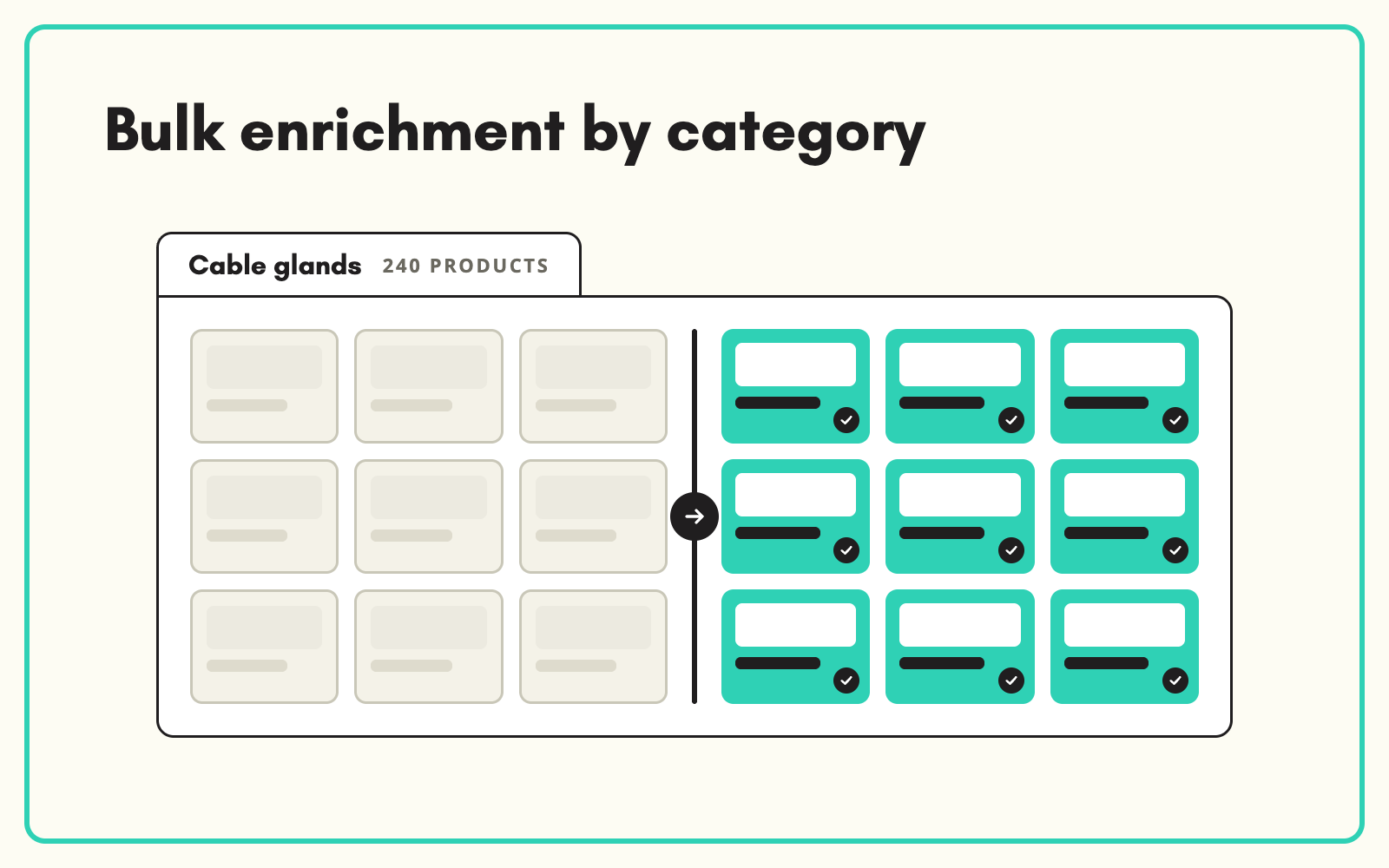
Bulk product data enrichment means completing a whole category, range or supplier in one run instead of product by product. SKULaunch takes a list of products, works out which attributes each one is missing for its category, fills them from the available sources, writes titles and descriptions from the verified attributes, and hands the batch back for review.
The problem
Enrichment done one product at a time never catches up. A category launch, a new supplier range or a marketplace deadline needs hundreds or thousands of products finished in days, but the team can only research and type so fast. Outsourcing helps with volume but adds briefing, quality checking and rework. The result is a catalogue where the top sellers are complete and everything else waits.
Before and after
An illustrative example from a garden and country retail range.
Before: the category at the start of the week
Garden hand tools: 1,240 products. Average completeness 38%. Descriptions on 210 of them. Filters for blade material and handle length show almost nothing.
After: one enrichment run in SKULaunch
- All 1,240 products enriched against the category's attribute set
- Blade material, handle length, weight and warranty filled where a source exists
- Titles and descriptions written from the verified attributes in your tone
- Products without a reliable source left visible as gaps, not guessed
- The whole batch reviewed and approved in the grid
How it works in SKULaunch
- Build the list. Select a category, a supplier, a saved search or a hand-picked set into a List. Lists can span several categories.
- Run AI Tools across the list. Extraction from datasheets, manufacturer pages, images and web search runs for every product in the list, against each product's own category attributes.
- Generate content from the result. Titles, descriptions, bullets and SEO fields are written from the verified attributes, not from guesswork.
- Review in bulk. Check the batch in the grid with the columns you choose, fix what needs fixing and approve.
How to plan a bulk enrichment run
Run by category, not by supplier, because attributes belong to categories and a category-sized batch can be checked consistently by one person who knows the products. Start with categories where filters matter most to customers, or where a channel deadline is closest. Agree the review standard before the run, for example spot-checking a set number of products per category plus every value that changed an existing one, so approval is fast and consistent.
What changes
Mole Valley Farmers enriched 35,000 SKUs in three weeks, against a nine-month manual estimate. The team's time went on checking and approving rather than researching and typing.
Common questions
How big can a batch be?
There is no fixed limit. Most teams run by category so each batch can be reviewed by the person who knows those products best.
Can we enrich only certain attributes?
Yes. Choose which attributes to fill in the run, for example only the ones a marketplace requires.
What happens to values we already have?
Existing values are kept unless you choose to overwrite them, and source priority decides which value wins.
Read the product data enrichment guide, the Mole Valley Farmers case study, and how to fill missing product attributes.

.avif)