
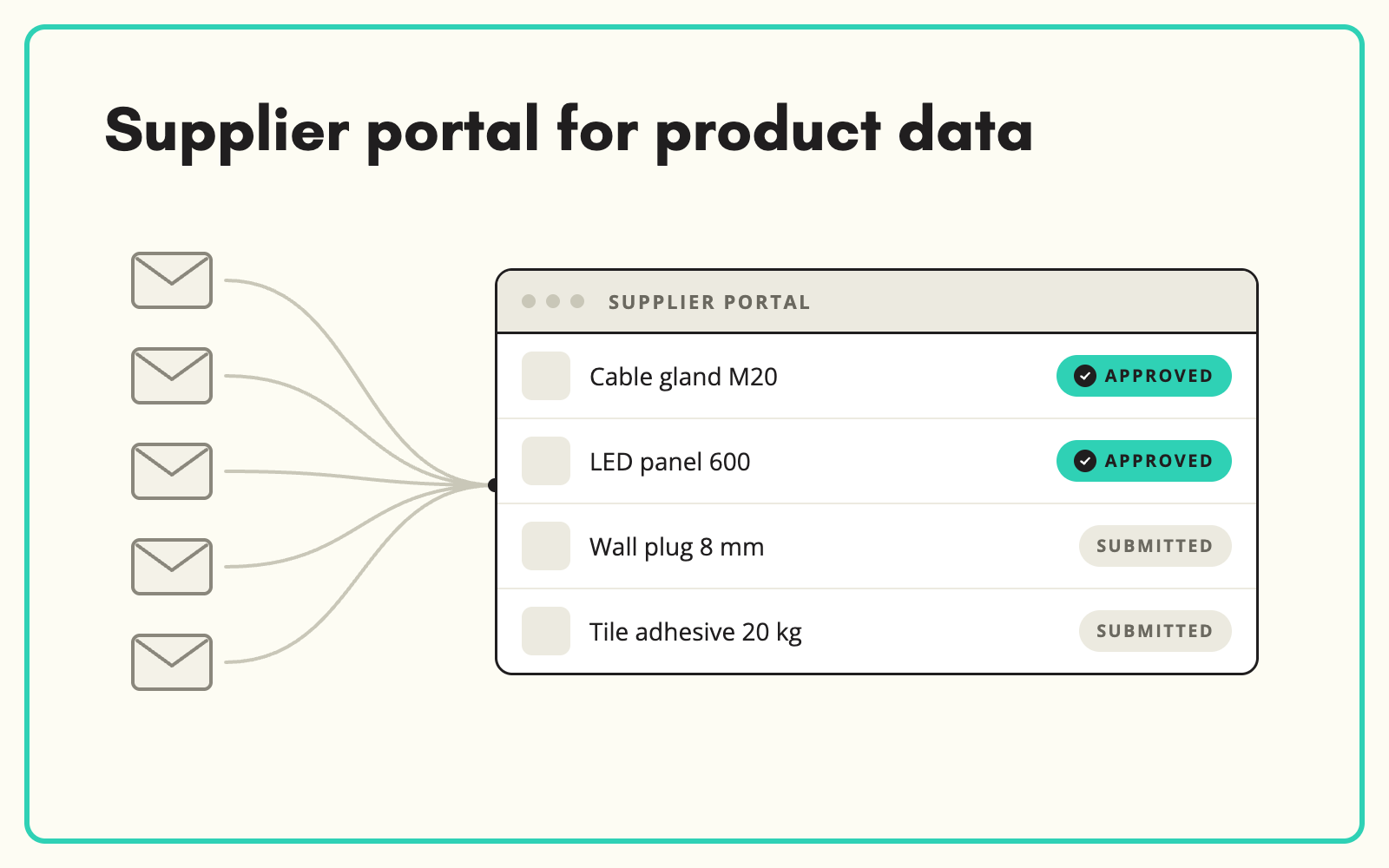
A supplier portal for product data gives every supplier one place to submit what you need, in the structure you need it, and gives your team one place to see what is outstanding. SKULaunch runs that portal on top of your own taxonomy and attribute model, so submissions arrive mapped, validated and ready to review.
The problem
Most product data still arrives by email. Each supplier sends a different spreadsheet, half the columns are missing, images come as attachments or expiring download links, and nobody can say with confidence which suppliers have sent what. The catalogue team spends its week chasing, copying and rekeying instead of improving the range. When a buyer asks why a launch slipped, the answer is usually sitting in someone's inbox.
Before and after
An illustrative example from a supplier of electrical accessories.
Before: what lands in the inbox
Hi, see attached our price file and some spec sheets. Images on our Dropbox, link valid 7 days. Let us know if you need anything else.
After: what your team sees in SKULaunch
- Supplier: request sent, 42 of 48 products submitted
- Status: 36 Approved, 4 Submitted for review, 2 Rejected with reasons
- Every product placed in the right category with its mandatory attributes complete
- Images and datasheets stored against each product with permanent links
- 6 products still outstanding, visible at a glance
How it works in SKULaunch
- Request the data from the platform. Choose the supplier and the products or categories you need, and send the request. The supplier gets one link, with no new software to install.
- Suppliers work from your requirements. They see, or download, a template built from your attribute model for each category. You decide which attributes the supplier must answer; everything else is left for enrichment.
- Submissions are checked as they arrive. Missing mandatory attributes and invalid values are flagged before a product reaches your team, not after it goes live.
- Review, approve or send back. Each product moves through Submitted, Approved or Rejected, with rejection reasons going straight back to the supplier. Later changes run through Update Requested and Update Submitted, so the audit trail stays intact.
What good supplier data collection looks like
The portals that work ask suppliers for less, not more. A supplier can reliably tell you their own part number, dimensions, materials, certifications and the datasheet. They are poor at writing your marketing copy or guessing your category structure. Keep the mandatory set short and specific to each category, and let enrichment fill the rest from the datasheet and the manufacturer's site. Completion rates rise because the form is answerable, and your team stops rejecting submissions for fields the supplier never had.
What changes
Supplier completion rates move from around 12% to over 80% when the request is specific, answerable and in one place. The chasing stops being manual, the status of every supplier is visible, and the data that does arrive is already in your structure.
Common questions
Do suppliers need an account or training?
No. Suppliers get a link to their own area of the portal and only see the products and attributes that apply to them.
What about suppliers who will only send a spreadsheet?
Import it. SKULaunch maps their columns to your attributes and you can save the mapping for their next file, so the outcome is the same structured record either way.
Does a supplier portal replace our PIM?
No. SKULaunch handles intake, validation, enrichment and approval, then publishes the finished record to your PIM, ERP or ecommerce platform. It can also act as a lightweight PIM if you do not have one.
See the full supplier onboarding guide, how new product introduction works through a Line Card, or the supplier portal platform page.

.avif)