
SKULaunch holds one governed record per product, models variants the way Shopify sells them, and pushes titles, descriptions, variants, images and metafields into your store through the Admin API. You set it up yourself. No six-month project.
Shopify's product model is built for selling: a title, a description, up to three options, images and prices. What it cannot do is turn two hundred supplier files into complete records, validate attributes against a schema, or tell you which products are missing the fields your filters and channels need. SKULaunch does that upstream, holds the finished record, and publishes it to Shopify.
Attributes, content, images and metafields held once. Shopify publishes from the record, so the store never drifts from the source.
Parents and children mapped to Shopify options and variants at publish, inside the three-option, 2,048-variant model.
AI-suggested attribute schemas per category, pushed to Shopify as metafields, so filters and category attributes have real values behind them.
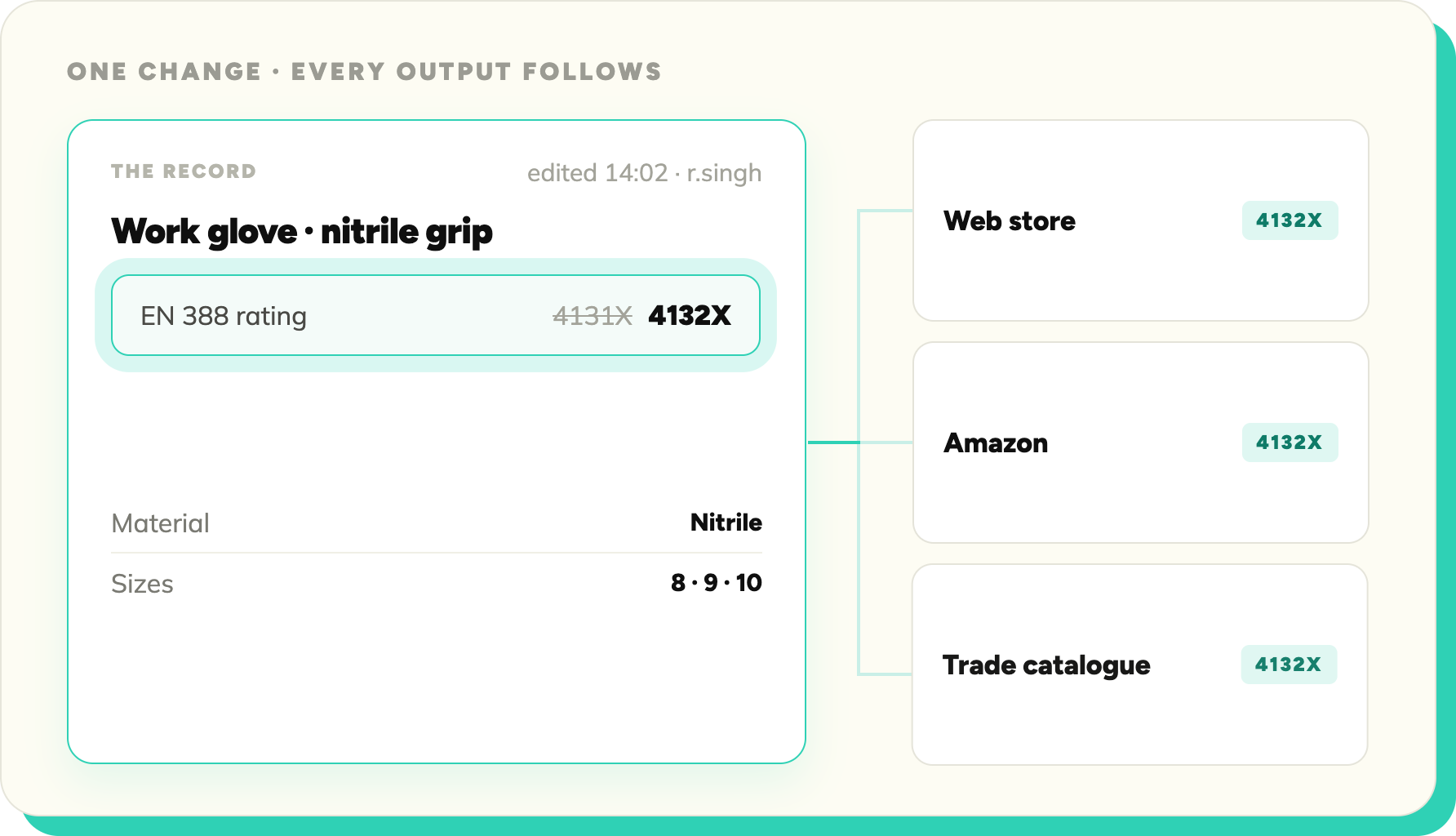
Most Shopify catalogues are maintained in three places at once: the admin, a master spreadsheet and a marketplace export, and no two agree. SKULaunch holds one record per product and Shopify reads from it. Your team edits the record, suppliers feed it, and every change publishes to the store through the Admin API. Existing products can be pulled in, fixed and re-published.

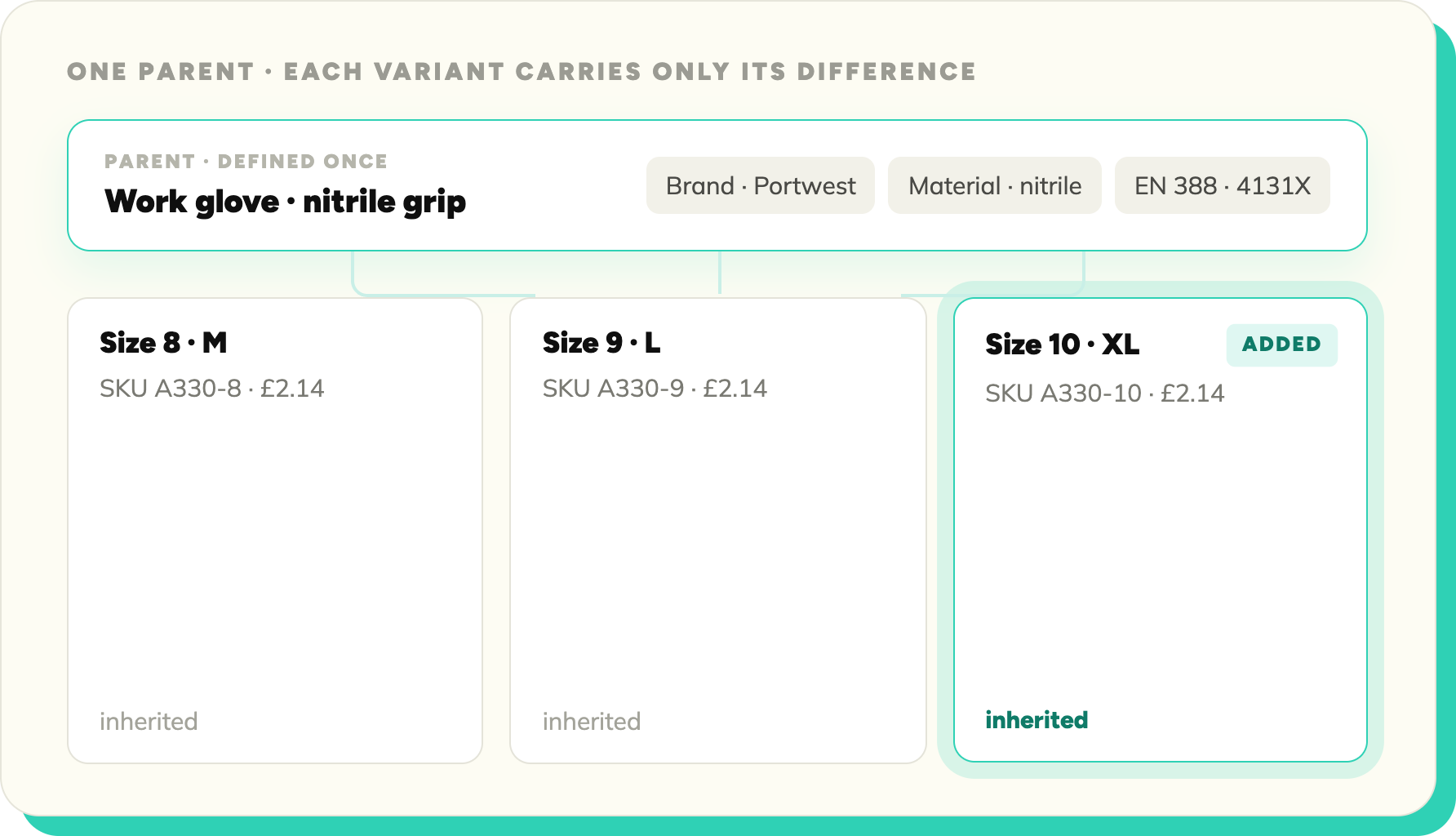
Shopify allows three options and up to 2,048 variants per product. A spreadsheet catalogue gets there with fifty rows that differ in one column. SKULaunch models the parent once, lets each variant carry only what differs, and maps that structure to Shopify options and variants when it publishes, with SKU, barcode, price, compare-at price, weight and inventory carried per variant.
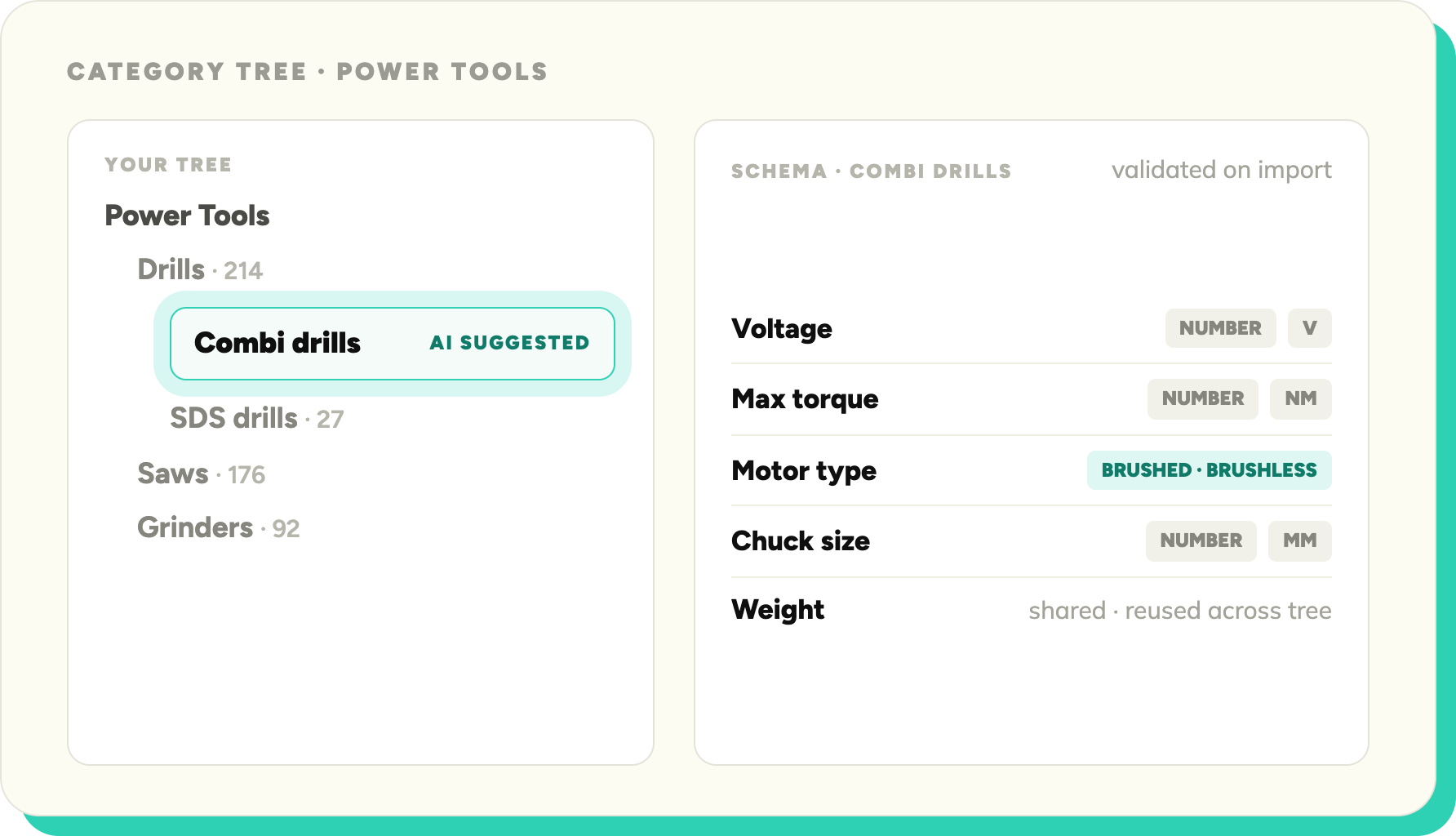
Shopify's Standard Product Taxonomy attaches category metafields to every product category, and theme filters and sales channels can only use them once they are filled. SKULaunch's AI suggests the attribute schema for each of your categories, extracts the values from supplier PDFs, spreadsheets and images, validates them against the schema, and pushes them to Shopify as metafields.
The PIM layer is one part. The rest gets supplier data in and Shopify listings out.
You're here.
Products, variants, images, metafields and SEO fields pushed through the Admin API. OAuth setup in under ten minutes.
Explore →Suppliers submit against your schema from one link. AI pre-fills, they confirm, you approve.
Explore →Not every store does. Shopify's own catalogue handles a single-channel range of simple products. A PIM starts earning its place when products arrive from many suppliers, when categories need thirty attributes with units, when the same catalogue also sells on Amazon or a marketplace, or when more than one person edits product data. SKULaunch is built for that case: it creates the data as well as storing it, and publishes to Shopify from one record.
Through the Shopify Admin API, authenticated with OAuth, set up in under ten minutes without code. The integration pushes products, variants, images, metafields, tags, SKU and barcode, price and compare-at price, weight and dimensions, inventory quantity, and the SEO title and meta description. It also pulls existing products from Shopify into SKULaunch so they can be enriched, validated and re-published. It works on a single store or across multiple storefronts on Shopify Plus.
SKULaunch models products as parents and variants on any axis and maps that structure to Shopify's options and variants at publish, within Shopify's limits of three options and 2,048 variants per product. Attributes that do not fit the standard product fields are pushed as metafields, with the values extracted from supplier files and validated against your category schema first.
Book 30 minutes. Bring your messiest category and we'll set it up as central records with variants modelled for Shopify, live in the session.

The AI product data platform that turns messy supplier files into sales-ready content. Run it upstream of your PIM, or run it as one.
