Standardise product data across every source
Use AI agents to map source fields to your schema, normalise units and formats, and keep naming and values consistent across suppliers, files, and standards.
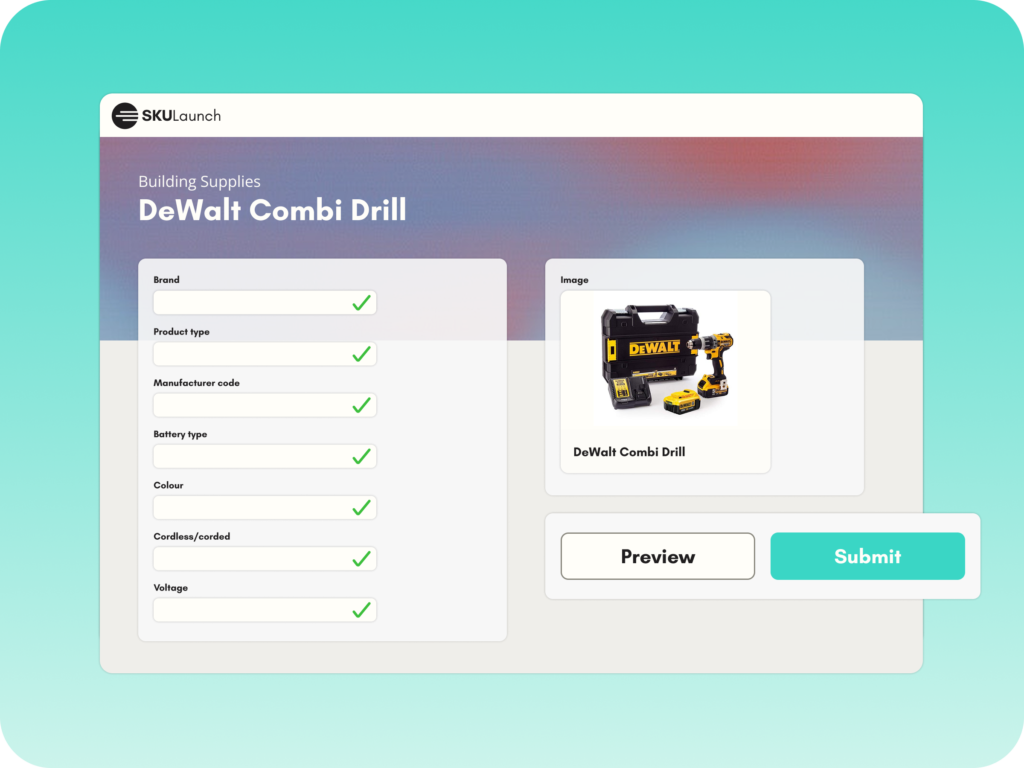
One schema, many sources
Bring data in from anywhere and align it to a consistent structure without rebuilding mappings every time.
Consistent units and values
Normalise measurements, naming conventions, and controlled values so your catalogue stays clean.
Less manual cleanup
AI agents handle the repetitive work of mapping and standardising so teams focus on exceptions, not admin.
Key Capabilities
AI assisted field mapping
Map source columns and fields into your target attributes faster, with suggested mappings.
Unit and format normalisation
Standardise units, decimals, casing, and formats across every input.
Value standardisation
Normalise inconsistent values like colour names, materials, pack sizes, and variations.
Cross-source consistency
Keep outputs consistent even when the same product arrives from multiple suppliers.
Reusable mapping logic
Save and reuse mapping rules so recurring sources stay aligned over time.
How it works
Bring in supplier files, spreadsheets, standards datasets, or extracted sources like PDFs and URLs.
AI suggests how source fields align to your attributes. Your team can confirm and refine mappings where needed.
AI agents standardise units and formats and apply consistent naming and controlled values across the dataset.
Mapped and normalised product records are ready for enrichment workflows, approvals, and publishing downstream.
FAQs
Mapping links incoming source fields to your target schema, so every source ends up in the same attribute structure.
Normalisation standardises units, formats, naming, and values so product data remains consistent across suppliers and categories.
Yes. SKULaunch helps align and standardise inputs from different sources so the record stays consistent, even when data conflicts.
Mapping logic can be reused and refined over time, so recurring sources stay aligned without starting from scratch.
No. Updates can be routed through review and approval workflows, so teams stay in control of what changes.