Enrich and Standardise Supplier Product Data for eCommerce
Supplier product data rarely arrives in a state that’s ready for ecommerce. Basic spreadsheets, missing specifications, inconsistent formats, and low-quality images slow down onboarding and damage customer experience. Without enrichment and standardisation, retailers face inaccurate listings, poor SEO performance, and rising return rates. To compete, ecommerce businesses need supplier data that is complete, consistent, and customer-ready from the start.
Typical Challenges
Even the best suppliers often fall short of delivering retail-ready product data. The most common issues include:
Inconsistent Attribute Naming
Suppliers label attributes differently — one uses “Colour,” another “Color,” and a third “Shade.” These inconsistencies make it difficult to maintain clean data, cause mismatches across systems, and frustrate customers who can’t filter or compare products properly.
2. Missing Specifications
Critical product details like dimensions, compliance certifications, or materials are frequently omitted. Without these fields, retailers can’t meet marketplace requirements or give customers the information they need to make confident purchases. The result? Delayed launches, customer confusion, and higher returns.
Non-Standard Measurements
Suppliers may mix units—millimetres, centimetres, inches—within the same dataset. This not only breaks product comparisons but can also cause compliance risks in certain industries. Manually correcting these unit mismatches is time-consuming and error-prone.
Poor Digital Assets
Low-quality, missing, or mismatched product images and videos undermine customer trust. Without high-resolution assets, ecommerce platforms look unprofessional, conversion rates fall, and listings risk rejection from marketplaces that demand strict image standards.
How SKULaunch solves these challenges
SKULaunch was designed to transform messy, inconsistent supplier data into enriched, standardised, ecommerce-ready content.
Automated Standardisation
Normalises naming conventions, units, and categories to ensure every product follows the same structure.
AI-Powered Enrichment
Fills in missing product details, auto-generates descriptions, and enhances SEO with keyword-rich titles and metadata.
Seamless System Integration
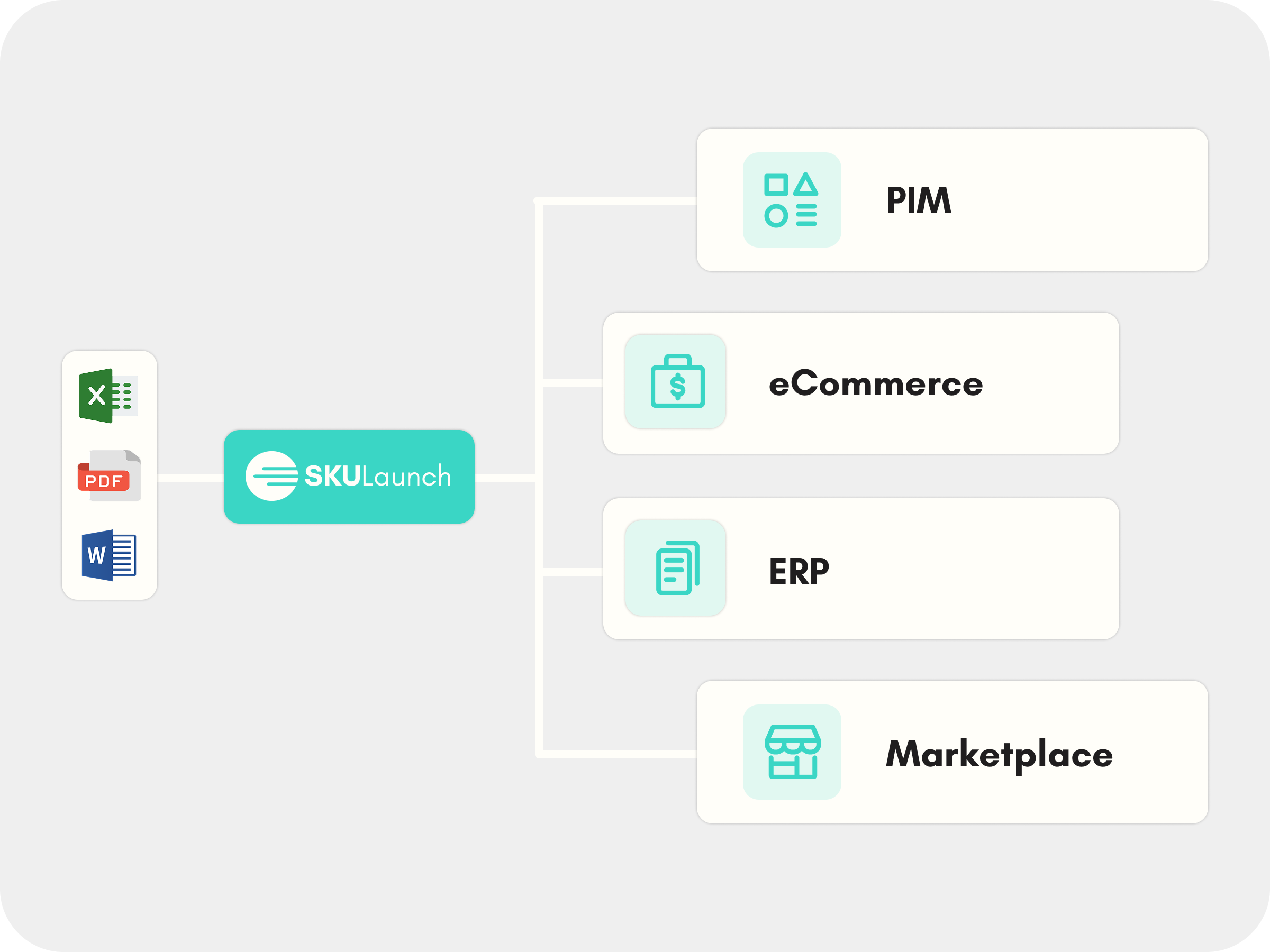
Pushes clean, standardised data directly into ecommerce platforms, PIMs, and ERPs without manual rework.
With SKULaunch, retailers move beyond basic supplier inputs to complete, optimised product listings that drive both traffic and conversions.
Automating what slows you down
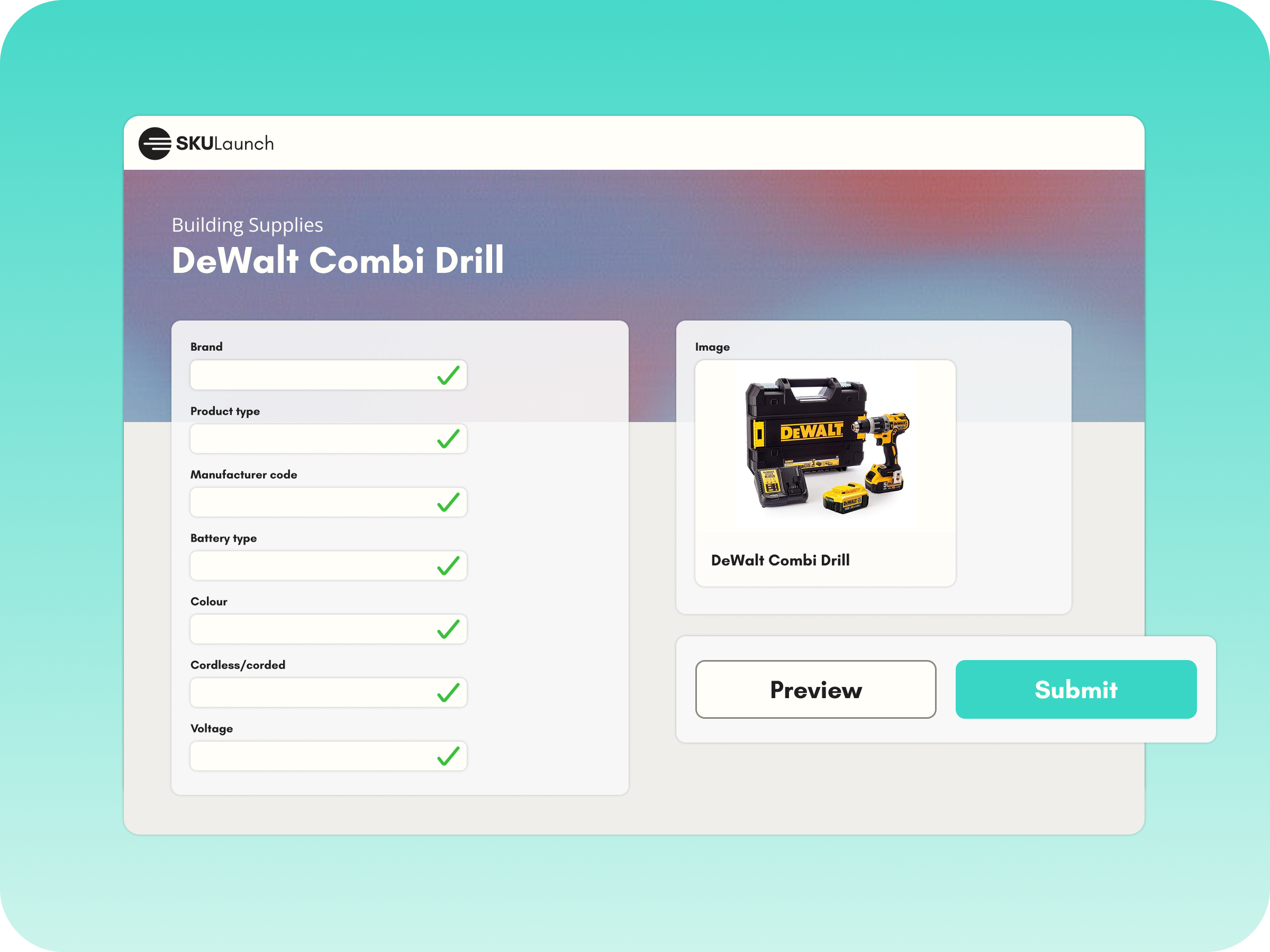
Transforming supplier product data into ecommerce-ready listings doesn’t need to be manual or painful. SKULaunch automates the process in three simple steps:
1
Step 1: Ingest & Standardise
Suppliers upload files in any format—Excel, CSV, XML, or PDF—and SKULaunch automatically maps and normalises attributes, units, and category structures.
Step 2: Enrich & Complete
2
Missing information is filled with AI-generated descriptions, compliance attributes, and enriched assets. Every product record becomes comprehensive and SEO-friendly.
2


Step 3: Sync & Publish
3
Once validated, clean product data flows directly to ecommerce platforms, marketplaces, and PIM/ERP systems—ready to sell across every channel.
Book a demo today and see how SKULaunch transforms supplier data into ecommerce-ready content.
Don’t let messy supplier data hold back your ecommerce growth. With SKULaunch, you can enrich and standardise product data automatically—improving SEO, reducing returns, and creating consistent, high-quality listings that convert.